The situation in the world from 2020 onwards made my wife and I long for a place to live in the midst of nature. In 2024, we got the chance to make this dream come true: we bought a beautiful house in Piedmont, northern Italy. We were promised that the renovation of this house would be completed in December of that year, so we put our house in the Netherlands up for sale in good time and arranged the move to Italy.
But… just one week before the moving date, our Dutch contact in Italy suddenly told us that the renovation would not be finished on time and the house would not be ready to move into. At that point, the dates for the transfer of our Dutch house and for the move had already been set, and all our belongings were already packed in moving boxes! Fortunately, there is also a small garden shed on our property in Piedmont, with a small living room, a bedroom and a bathroom. With a few simple modifications, this cottage could be made habitable, and we were able to stay there for the time being.
We moved in on the day of the winter solstice, armed against the cold with a small wood-burning stove and a supply of firewood. It turned out that the main house was not so much not ready as that almost nothing had been done yet. It would be another 4½ months before we could move in. For my wife and me, that winter was the coldest we had ever experienced. Not so much because of the temperature – after all, we come from the Netherlands – but mainly because of the limited resources we had available to heat our primitive and poorly insulated living room. And the cold lasted a long time. We needed our wood-burning stove until May of the following year.
The situation in the world from 2020 onwards made my wife and I long for a place to live in the midst of nature. In 2024, we got the chance to make this dream come true: we bought a beautiful house in Piedmont, northern Italy. We were promised that the renovation of this house would be completed in December of that year, so we put our house in the Netherlands up for sale in good time and arranged the move to Italy. But… just one week before the moving date, our Dutch contact in Italy suddenly told us that the renovation would not be finished on time and the house would not be ready to move into. At that point, the dates for the transfer of our Dutch house and for the move had already been set, and all our belongings were already packed in moving boxes!
Fortunately, there is also a small garden shed on our property in Piedmont, with a small living room, a bedroom and a bathroom. With a few simple modifications, this cottage could be made habitable, and we were able to stay there for the time being. We moved in on the day of the winter solstice, armed against the cold with a small wood-burning stove and a supply of firewood. It turned out that the main house was not so much not ready as that virtually nothing had been done yet. It would be another 4½ months before we could move in. For my wife and me, that winter was the coldest we had ever experienced. Not so much because of the temperature – after all, we come from the Netherlands – but mainly because of the limited resources we had available to heat our primitive and poorly insulated living room. And the cold lasted a long time. We needed our wood-burning stove until May of the following year.
But at last, our long wait was rewarded. Since the end of April 2025, we have been living in our new dream home, and this violin sonata is one of the first compositions I wrote in my new study.
The sonata’s outer movements contain references to Italian music, such as Vivaldi’s Violin Concerto Spring from The Four Seasons and popular Piedmontese melodies such as Piemontesina Bella and, towards the end of the last movement, La Corenta.
A big thank you to Bram Heemskerk for having stimulated and enabled me to write this composition!
This oratorio deals with what I believe to be very important developments in recent human history, centered around the outbreak of the Covid-19 pandemic. This event, with everything surrounding it, has been so profound for each and every one of us that I very much wanted to dedicate a musical document to it in the form of an oratorio for soloists, choir and orchestra.
A common statement at the beginning of the pandemic was: ‘Things will never be as they were.’ Furthermore, concepts like Build Back Better and Great Reset were being introduced. I found this fascinating: regardless of these slogans, I too had come to the conclusion that humanity is evolving in a way that simply cannot be continued forever. To mention an example: we produce so much plastic, that this will turn against us, some day, one way or the other. And there are more examples: pesticides in our food and farmland, radioactive waste as a by-product of nuclear power, and so on. The time will inevitably come when ‘the shore will make the ship turn’.
This theme runs like a thread through my compositions. An example is the second movement of my first symphony, subtitled From the Diary of Etty Hillesum.[1] This movement is called Systems and is based on the following excerpt from Etty’s diary: ’The terrifying thing is, that systems rise above people and hold people in a satanic grip, designers as well as victims of that system, as great buildings and towers, built by people with their own hands, rise above us at some point, control us and can collapse over us and bury us.’ The way life grinded to a halt after the pandemic outbreak reminded me of this sharp observation.
Immediately after the commission was granted, in October 2023, I set to work intensively, and with me my regular lyricist Franz K. Custos. The first thing that had to be available was an outline of the various movements of which the oratorio would consist, and a draft of the texts to be set to music. While working on this, we discovered all sorts of details about how the people advocating the Build Back Better idea envisioned this ‘better built back’ world. It turned out that their vision is based on quite materialistic thinking; a world of ideas that denies the existence of concepts such as God, the soul, free will or immortality, and sees humans as improvable, ‘upgradable’, by means of the application of modern technology.
Franz Custos and I wanted to contrast this ‘transhumanist’ ideal, as promoted by institutions such as the World Economic Forum and articulated by people like Yuval Harari and Klaus Schwab, with a vision of the universe as described in the Corpus Hermeticum, an ancient text attributed to a certain Hermes Trismegistus: ‘threefold great Hermes’.[2]
What struck me while reading the Hermetic tracts was a certain similarity with, on the one hand, the Hindu-Buddhist view of existence (karma and reincarnation), and on the other hand, with the many near-death experiences as people all over the world have experienced and are still experiencing; experiences that indicate that human beings have a soul that is immortal and that death is just a transition to another form of life. Also, Hermetic philosophy emphasizes that human beings are divine and that there is in fact only one ‘sin’, namely lack of consciousness. Once you really understand how universal laws such as for instance the law of karma work, you won’t even think of deliberately doing things that are damaging for your fellow human beings, and therefore for you yourself as well.
What Franz Custos and I also discovered was that all kinds of prominent people connected to the World Economic Forum were already priming people’s minds for what they call a Great Reset, years before the pandemic broke out. For instance, the now familiar slogan You will own nothing and you will be happy (https://www.youtube.com/watch?v=4zUjsEaKbkM) dates back to 2016, and is elaborated on in an article by Danish Young Global WEF Leader Ida Auken, also from 2016, with the (original, later modified) title Welcome to 2030.I own nothing, have no privacy, and life has never been better (https://medium.com/world-economic-forum/welcome-to-2030-i-own-nothing-have-no-privacy-and-life-has-never-been-better-ee2eed62f710).
We also discovered, that as early as of 2005, several prominent persons have predicted that a pandemic would come. What I was already familiar with, was a report, written in 2010, with the telling title Scenario LOCK STEP, a world of tighter top-down government control and more authoritarian leadership, with limited innovation and growing citizen pushback (https://archive.org/details/pdfy-tNG7MjZUicS-wiJb/mode/2up). This report describes how a pandemic, supplemented with, among other things, climate change issues, must necessarily result in citizens’ freedoms being – permanently – curtailed. I therefore immediately wrote a cantata in 2020, entitled An Ardent Love Affair, which musically illustrates this Scenario; this in collaboration with American poet Michael R. Burch. A modified version of part of this composition is included in the oratorio, as Movement V: The World Grinded to a Halt, the movement that depicts how ’the pandemic the world had been expecting for years finally struck’.[3]
For the cantata, Michael R. Burch transformed excerpts from Scenario Lockstep into poetry, suitable for setting to music. Similarly, Franz K. Custos transformed public statements by prominent figures in the Netherlands and abroad, as well as excerpts from various public articles, into song lyrics, which I was then able to set to music. However, we wanted to leave one single statement by a prominent figure unchanged: a remarkable assertion by Abraham Kuyper, Prime Minister of the Netherlands from 1901 to 1905: In every successful attack on freedom, the state can never be an accomplice. The main culprit remains the duty-forgotten citizen himself, who, slacking off his moral muscle in sin and carousal, lost the power of his own initiative. Our prime minister at the time, Mark Rutte, quoted this statement during the Parliamentary debate of 21 February 2021 (https://www.youtube.com/watch?v=sY5QjgUXmf4).
Franz Custos’ and my efforts eventually lead up to a composition consisting of 11 movements. Here is a summary of them:
I. Prelude, for orchestra A prelude, with a positive, bright ending, passing into the beginning of this composition’s story II. A World View, for tenor and orchestra A summary of the transhumanist ideal image regarding the future of humanity, before the outbreak of the Covid-19 pandemic III. Hymnus ad Divinum (Hymn to the Divine), for choir and orchestra As a contrast to the previous movement, elements from the ancient Hermetic philosophy are highlighted here. IV. Predictions, for soprano, tenor, baritone and orchestra In addition to various predictions by prominent figures that a pandemic would someday break out, some pre-2020 visions of what some prominent figures believe to be an ideal future for humanity are also featured. V. The World Grinded to a Halt, for tenor, baritone, choir and orchestra:A brief depiction of what happened when the pandemic broke out, based on excerpts from the accurate description of this in 2010’s Scenario Lockstep VI. ‘Things will never be as they were’, for tenor, baritone and orchestra About various measures deemed necessary to combat the virus, complemented by the statement that the pandemic is not just a tragic event, but also a golden opportunity to realize a necessary Great Reset. VII. ‘The Apex of our Century’, for tenor and orchestra A euphoric compilation of the transhumanist ideal, this time complete with a vision of an ‘upgraded’, chipped world population VIII. Over the Top, for choir and orchestra The various government measures to combat the pandemic inevitably led to occasional hilarious scenes, which we can now look back on with good-natured humor. An anthology. IX. I’ve Got Climate Change!, for soprano, choir and orchestra The combination of absurdities and frightening assertions confuses the soprano and the chorus to such an extent that they believe they have contracted the disease Climate Change. X. Mama, I don’t want to be here, for children’s voice and orchestra Song of a child, longing for how life used to be before the pandemic outbreak XI. Towards a Golden Future, for soprano, tenor, baritone, children’s voice and orchestra I see the transformation humanity is currently in as a kind of birth canal to a new, better world. This is the theme of the final movement, where texts from the Corpus Hermeticum are supplemented by lines of poetry by Franz Custos, who has also added some Latin lines in the spirit of Hermetic philosophy.
To add to this concluding section: I base my view that we will eventually face a golden future partly on the Hermetic ideas, which state that man, consisting of light and life, is in fact divine and the soul immortal. I have also read many books on life after death, such as Life in the World Unseen (https://www.ghostcircle.com/wp-content/uploads/2014/08/Anthony-Borgia-Life-In-The-World-Unseen.pdf) and A Wanderer in the Spirit Lands (https://sacred-texts.com/eso/wsl/index.htm) and listened to or read many testimonies of so-called ‘near-death experiences’. According to these books, the collective development of human consciousness will eventually lead to the point that entities that feed off our negative feelings, such as fear, sadness or anger[4], will no longer be able to exist here, for lack of sustenance. To mention an example, one day the insight will come that war can never bring about anything positive because negative energy always leads to negative results. The recently unleashed wars show that we have not yet reached that point. At the same time, things like the greatly increased interest in spirituality show that our collective consciousness is growing, and it is my impression that the pandemic outbreak has given a powerful impetus to this development. All in all, we are not there yet, and it looks like we are in for a difficult time in the short term; but we are nevertheless on the right track.
Eduard de Boer, April 6, 2024
[1] Esther (Etty) Hillesum (15 January 1914 – 30 November 1943) was a Dutch Jewish author of confessional letters and diaries which describe both her religious awakening and the persecutions of Jewish people in Amsterdam during the German occupation. In 1943, she was deported and murdered in the Auschwitz concentration camp (https://en.wikipedia.org/wiki/Etty_Hillesum).
[2] The Hermetic writings have their origin in pre-Christian Egypt, but the ‘tracts’ known today date from the first to third centuries AD, and are strongly influenced by the philosophy of Neoplatonism. A Greek version of the Corpus Hermeticum, was discovered in 1460 by a monk in Macedonia and translated into Latin by Marsilio Ficino a few years later, by order of Lorenzo de Medici. Excerpts from this translation are included in my oratorio.
[3] Cf. p. 18 from Scenario Lockstep: In 2012, the pandemic that the world had been anticipating for years finally hit. (…) This new influenza strain (…) was extremely virulent and deadly. (…) The virus streaked around the world, infecting nearly 20 percent of the global population and killing 8 million in just seven months, the majority of them healthy young adults. The pandemic also had a deadly effect on economies: international mobility of both people and goods screeched to a halt, debilitating industries like tourism and breaking global supply chains. Even locally, normally bustling shops and office buildings sat empty for months, devoid of both employees and customers.
Many creative artists will recognise it: an event in your personal life that affects you so much that you need to vent your anger and frustration somewhere. In such a case, dedicating an artwork to this theme can have the effect of a liberating outlet.
Such a thing happened to me in 2020. In that year, my father-in-law died in a care home, 500 metres away from our house, after having suffered from a lot of loneliness. As such, he did not die of the ‘coronavirus’, at the time prevalent according to the government, but of the consequences of the measures the government imposed on the population to combat that ‘virus’. Thereby, he was suffering from dementia at the end of his life, so people could not explain to him why his family, who after all lived nearby and normally visited him very often, suddenly stopped visiting him. I expressed my anger at this state of affairs in a song titled Einsamkeit (Loneliness) (https://www.eduarddeboer.org/einsamkeit-loneliness-version-for-tenor-and-piano-op-97-nr-3/).
Some 4½ years later, again something happened that made my blood boil. A certain M., with whom I had been friends during my student days, resurfaced after having been out of my life for many years. She currently lives in northern Italy and earns her money by, among other things, supervising renovations of houses there. When she came to visit us, my wife and I were considering emigrating abroad, and M. said she knew a nice house for us in Piedmont. We went there, indeed liked the found the house very much, and we bought it. It went without saying that M. would manage the renovation. She assured us that it would be a small renovation and that everything would be ready by mid-December. We then sold our Dutch house, and agreed with the buyers that the handover would take place in mid-December. And we arranged a moving company, which would load our furniture a few days before the transfer.
A week before these scheduled dates, we were suddenly told that the renovation was not yet finished, and that a two-month delay was needed. By then, almost all our belongings had been packed into piles of boxes; untraceable in the sheer volume. Our household contents had to be stored – at our expense – we were forced to spend thousands of euros in expenses, for instance to buy necessary stuff, and I could not compose – and earn money with it – during this period. I wrote M. an extensive e-mail complaining that she had not informed us earlier. Had she done so, we could have taken appropriate action, but it was too late for that now. M. wrote me a long e-mail back, explaining that, on the one hand, she had been ‘at fault’, but that, on the other, in fact, nothing was her fault, but that the fault lay with others.
Once we arrived in northern Italy, we saw, that our house was not so much unfinished as that virtually nothing had been done to it. I went to see M. to talk things out, but found her very angry. She had already apologised and explained that it was not her fault, and that was the end of it, she thought. That we mainly had a problem with the fact that she had informed us far too late about the delay in the renovation, which she should have realized months earlier, I couldn’t get her to understand. On the contrary, she was extremely outraged that I had hurt her in my e-mail.
We were fortunate that in the garden of our new house there is a small cottage, with primitive facilities by Western standards. And so it was that my wife and I subsequently spent over three(!) cold winter months in a tiny space, which simultaneously served as a reception hall, living room, kitchen, workspace, and, if necessary, second bedroom.
During this period, it turned out that M.’s blunder was the first in a long series, and the circumstances under which we had to live because of her actions did not seem to interest her at all. It also turned out that she had become so forgetful over the years that – in her own words – she did not remember anything she said (promised), if it was not in writing. I could, together with Willem Erné, a writer also duped by M., write a comic operetta about what we experienced in the winter months of 2024-’25. Who knows. If it comes to it, a certain Maripo (‘nearly perfect in every way’) will star in it. And this song will then be part of it.
This song is the only composition I have been able – absolutely wanted! –to write, to lyrics by Franz K. Custos, my regular lyricist since 2020. He took as his starting point the e-mail in which M. had explained to me in December 2024 that although she had been at fault, in fact all the blame lay with others, and converted the text of the e-mail into rhymed song lyrics. In this mail, M. had written to me that she understood my need to vent my frustration somewhere. By writing this song, I finally managed to do so.
Lyrics by Franz K. Custos:
MARIPO Bij bouwnijverheid Raak je gauw het overzicht kwijt. Dan was er weer een storing, En dan weer een ontsporing. Ook ik was vaak niet op de hoogte gebracht, En daarom liep het anders dan gedacht.
Op die manier heb ik te lang gewacht Met jullie te vertellen hoe of wat, Met te zeggen hoe het nu in feite zat, En dat heeft jullie narigheid gebracht.
REFREIN Helaas, helaas. Ik ben in gebreke gebleven, Maar…
Het is niet mijn schuld, Ik kan er niets aan doen. Ik kan geen ijzer met handen breken. Ik ben de onschuld Zelve, en een en al fatsoen. Ik heb dan ook eigenlijk, Als je ‘t goed beschouwt, En als je ‘t feitelijk gedegen onderbouwt, Geen gebreken.
Ik heb jullie nooit Naar de achtergrond gegooid. Het lag aan tegenslagen, Meer dan ik kon verdragen. De tegenwind kwam werk’lijk telkens weer Uit steeds een an’dre hoek. Ja, keer op keer. Ik had vertrouwen in mijn personeel. Ik had ze tot veel meer in staat geacht, En daarom heb ik al te lang gewacht. Mijn God! Het wordt me allemaal te veel! KOOR Bla bla Bla bla (etc.)
REFREIN MARIPO Helaas, helaas. Ik ben in gebreke gebleven, Maar…
Het is niet mijn schuld, Ik kan er niets aan doen. Ik kan geen ijzer met handen breken. Ik ben de onschuld Zelve, en een en al fatsoen. Ik heb dan ook eigenlijk, Als je ‘t goed beschouwt, En als je ‘t feitelijk gedegen onderbouwt, Geen gebreken. KOOR Bla bla Bla bla (etc.)
MARIPO Maar goed, ik begrijp: Jullie moesten ’t ergens kwijt. Ik heb daar wel begrip voor, Want ik heb veel begrip, hoor, Maar steeds maar tegenwind, ja telkens weer, Dat wordt ja zelfs voor mij een beetje veel. Ik kan er veel meer woorden aan besteden, Om jullie te vertellen hoe of wat, Om te zeggen hoe het nu in feite zat. En hoe ik zelf hieronder heb geleden. KOOR Bla bla bla bla Bla bla bla bla (etc.)
REFREIN MARIPO Nee,… Het is niet mijn schuld, Ik kan er niets aan doen. Ik kan geen ijzer met handen breken. Ik ben de onschuld Zelve, en een en al fatsoen. Ik heb dan ook eigenlijk, Als je ‘t goed beschouwt, En als je ‘t feitelijk heel grondig onderbouwt, In het geheel geen gebreken. KOOR Bla bla bla bla Bla bla bla bla (etc.)
MARIPO In matters concerning construction One soon loses track. One moment, there was yet another breakdown, And the next, some derailment or other. I, too, was often not informed, And as a result, things turned out differently than expected. And so, I waited too long With telling you how or what, With letting you know you how things actually were, And this has brought you trouble.
REFRAIN Alas, alas. I have been at fault, But…
It’s not my fault, I can’t do anything about it. I cannot break iron with my hands. I’m Innocence Itself, and all decency. Actually, I have, When you consider things properly, And when you substantiate them very thoroughly, No flaws.
I never Threw you into the background. It was all down to setbacks, More than I could bear. Truly, each and every time the headwind came From a different angle. Yes, time and again. I had faith in my staff. I had thought them capable of much more, And so I waited all too long. My God! It’s all becoming too much for me! CHORUS Bla bla Bla bla (etc.)
REFRAIN MARIPO Alas, alas. I have been at fault, But…
It’s not my fault, I can’t do anything about it. I cannot break iron with my hands. I’m Innocence Itself, and all decency. Actually, I have, When you consider things properly, And when you substantiate them very thoroughly, No flaws. CHORUS Bla bla Bla bla (etc.)
MARIPO But anyway, I understand: You had to put it somewhere. I do understand that, Since I have of lot of understanding, you know, But always a headwind, yes each and every time, In the end, that becomes a bit too much, even for me. I could spend many more words on this topic, Telling you how or what, Letting you know you how things actually were, And how I myself suffered because of it. CHORUS Bla bla bla bla Bla bla bla bla (etc.)
REFRAIN MARIPO No,… It’s not my fault, I can’t do anything about it. I cannot break iron with my hands. I’m Innocence Itself, and all decency. Actually, I have, When you consider things properly, And when you substantiate them very thoroughly, No flaws at all. CHORUS Bla bla bla bla Bla bla bla bla (etc.)
Laten wij zacht zijn voor elkander, kind.
O, laten wij maar zacht zijn, en maar niet
het hoge woord van liefde spreken,
want hoeveel harten moesten daarom breken
in hulpeloos verdriet.
Wij zijn maar als de blaren in de wind
rits’lend langs de zoom van oude wouden,
en alles is onzeker, en hoe zouden
wij weten wat alleen de wind weet, kind.
Veel liefde ging verloren in de wind,
en wat de wind wil zullen wij nooit weten;
en daarom ─ voor we elkander weer vergeten ─
laten wij zacht zijn voor elkander, kind,
laten wij zacht zijn voor elkander, kind.
Let us be gentle to each other, child.
O, let’s rather be gentle, and not
utter this precious word of love,
for how many hearts had to break because of this
in helpless grief.
We are only like leaves in the wind,
rustling along the edge of ancients forests,
and everything is uncertain, and how should
we know what only the wind knows, child.
Much love got lost in the wind,
and what the wind wants we will never know;
and therefore – before we forget each other again –
let us be gentle to each other, child,
let us be gentle to each other, child.
Sta op en Schitter (Arise and Shine) was inspired by several Georgian legends about heroes, like Mindia, The Knight in the Panther’s Skin, St. George and Amirani. Georgia was one of the first countries in the world to become a Christian nation, as long ago as in the 4th century. I spent the summer holidays of 2013 in Georgia, together with my family, and we camped for one week in the wild in the Caucasus. To Arise and Shine is precisely what the gorgeous Georgian nature inspires one to do.
Sta op en Schitter is a famous quote from Isaiah 60: 1. It was the motto of my mother-in-law, who was able to fight cancer during 14½ years, before she finally succumbed to it, one month after my family’s holiday in Georgia.
All in all, Sta op en Schitter is first of all an ode to the beautiful country of Georgia and its wonderful people. While it doesn’t actually quote any Georgian traditional melody, it does make extensive use of the characteristics of Georgian harmony and polyphony and Caucasian rhythms. However, there is a broader context as well, in the sense of my mother-in-law’s motto: to rise up and shine is always a heroic thing to do, regardless of one’s circumstances.
I transcribed the original version, written in 2018 for the Dutch Ricciotti Ensemble, at the request of the Leipziger Symphonieorchester, that will perform the piece several times in September 2025.
Composing this song cycle was made possible by Christoph Bouthillier and Nelly Bouthillier – Den Boer Dedicated to the children of Gaza and their parents
The full score of the version with piano may be copied, shared and distributed freely. It can be downloaded here for free: Children of Gaza – Partituur met Voorwerk. It will be appreciated if information about performances and / or recordings of this cycle or part thereof is sent to hallo[at]eduarddeboer.org[1].
[1] Please replace the [at] by @. This is to avoid spam attacks.
In 1976, I was 19 years old when I spent my summer holidays in Israel. I worked for three weeks in a Kibbutz, then travelled one week through the country. I very much enjoyed those weeks and have many beautiful memories of them. However, contrary to the expectations I had at the time, my fondest memories today have to do with Palestinians rather than Israelis. For instance, I vividly remember that, during my weeks in the Kibbutz, I was ordered to join a group that worked on a sunflower field in a nearby village, supervised by an old Palestinian man. He turned out to be the friendliest, mildest and loveliest person I had ever met. And I also remember hitchhiking somewhere, with a large backpack on my shoulders and a big camera hanging around my neck, when someone shouted at me, inviting me to come into his house; which I did. Maybe it was a naïve thing to do, especially for someone who obviously looked as much like a young and vulnerable Western tourist as I did, but I never regretted it. I was welcomed by a group of very friendly Palestinians, who offered me food and drink, and even showed me where the key to the house was hidden, so I could enter it at any time, whenever I wished. I had never encountered such hospitality before. These experiences formed a contrast to what I had learned at the Christian schools I had attended, where I had been told that Arabs were stupid heathens and that it was a good thing that God had finally returned the ‘Holy Land’ to his ‘chosen people’.
I never returned to Israel, but I did develop a fondness for Jewish folk melodies, which I incorporated into some of my compositions, for instance in my first symphony and in my Yiddish Suite for cello and piano. (Recordings of these compositions can be found on YouTube, under my pseudonym Alexander Comitas.)
It was many years after my visit to this country, that my Belgian friend André Posman, at the time an organizer of classical concerts, made me aware of the plight of the Palestinians and the lack of attention by the mainstream media for their dire situation. He offered me a book about the situation in the Gaza Strip, a book that among other things contained some poems. Slowly the idea began to take shape in my mind ‘to do something’ with this, at some point in the future.
Again, years later, this idea had developed to the point that I wished to compose a song cycle about Palestinian children in Gaza. By then, the Internet had become commonplace, so I began searching it for poems having to do with this theme. In doing so, I came across the name of an American poet, Michael R. Burch, who on his website www.thehypertexts.com has for many years been campaigning very actively for the Palestinian cause. I found his e-mail address and in January 2016, I finally decided to contact him about the idea of a song cycle. By then, the idea of a ‘storyline’ had become rather clear. I envisaged a cycle with two consecutive climaxes, one where a child’s family is shot by Israeli soldiers during a raid, and later another one where a child is killed by a bomb dropped by an Israeli plane[1]. I also had found a number of Palestinian folk songs on YouTube and I had purchased a CD called Lost Songs of Palestine. In this way, I had acquired a small collection of songs to which I could allude.
And then a miracle happened, or rather: a series of miracles. Michael not only gave me permission to use any of his poems I wanted, but also offered to write any additional poems I needed for the cycle. Furthermore, I could feel free to instruct him not only about the subject of each poem, but also about its length, its meter and form, and about certain melodies I would like to use. He turned out to be just the ideal collaborator to make the wish of composing a cycle like this come true!
And it didn’t stop there. I had proposed to Michael to make it a project extending over several years. I earn my income mainly by composing in response to commissions and I intended to write one song at a time in between them. But then, in February, I received an e-mail from Nelly, the widow of Christoph, a dear friend of mine who had sadly died a few months earlier, informing me that in his will he had left me and my wife an amount of money. I asked her if she would allow me to regard this amount as a commission fee for a Children of Gaza song cycle, and she liked the idea, because Christoph was the type of person who always stood up against injustice.
And on top of all this, against my expectation, I couldn’t start with either of both composition commissions I had at this time: for one of them, a scenario still hadn’t been written and for the other one I needed a detailed account of the technical level of the members of the performing band. So, suddenly and unexpectedly, I had the collaboration of an ideal poet, the money necessary to write the cycle, and also an unexpected and perhaps provident amount of time!
Michael and I decided to go for it the cycle rapidly progressed, until 2½ months later we reached the point that it was ready. Luckily, inspiration came abundantly, and during the whole composing process I had the feeling that everything was just falling into place automatically. To give an example: the impact of the fatal bomb at the end of the song In the Shelter turned out to be exactly at the Golden Ratio point of the cycle as a whole; something I had neither expected nor influenced consciously in any way. The whole experience felt to me as if ‘it just had to be’.
The Palestinian folk songs that are quoted or alluded to in the cycle are:
– Al-Yadil Yadi (My Carefree Ways). This melody appears right at the opening of the first song and it returns at various places throughout the cycle.
– A so-called Dabka, a Palestinian folk song and dance, dealing with the occupation of Palestine in 1948. This theme, too, is heard for the first time in the first song, and it, too, returns a number of times, throughout the cycle.
– Mouvasha Lamma Bada Yathanna, an ancient song of lament. Merely hinted at in the song For God’s Sake, I’m only a Child, it is clearly alluded to in the songs In the Shelter and Among the Angels.
– Hala Layya, a lullaby. The beginning of this melody appears for the first time in the song Mother’s Smile, reappearing in In the Shelter and Among the Angels.
Happy as the story of this cycle’s creation is, the plight of the Palestinians living in Gaza and the West Bank is far from happy. No parent would allow his or her own children to be subject to the dire circumstances under which the children born there are living, and this alone ought to be enough reason for everyone to want to put an end to the atrocities that have been going on far too long in this troubled region. Everyone who has access to the Internet can now read about this, for instance on Michael Burch’s website www.thehypertexts.com (search for the terms ‘Palestine ‘or ‘Nakba’) or can watch videos, for instance on Facebook pages like The Eye of Palestine or The Palestinian Information Center. No ‘Holy Land’ or text in Bible or Torah can justify how Palestinian children are treated on their native soil.
The atrocity of the renewed Israeli attacks on Gaza starting after October 7, 2023, prompted me to transcribe the song cycle for voice and orchestra. A soundfile of this version can be heard here, whereby the video is showing the notes of the version with piano.
Eduard de Boer, May 14th, 2016 / February 7th, 2025
[1] The idea for both dramatic climaxes came from a number of poignant accounts on Michael Burch’s website
www.thehypertexts.com, (search for ‘Nakba Index‘, nakba being Arabic for catastrophe). See www.breakingthesilence.org.il, with testimonies by critical Israeli soldiers, for similar stories. A particularly poignant testimony by founder of the Palestina Medical Relief Society Mustafa Barghouti can be found on YouTube (www.youtube.com/watch?v=kDe_ZXOwWlU, search words Gaza Barghouti).
YouTube: ‘Eduard de Boer: Children of Gaza. Song cycle on poems of Michael R. Burch – Version with orchestra’
In August 2025, shortly after I had finished the instrumentation, I won an ‘Absolute First Prize’ in the Orchestra category of the international Golden Prestige International Music Competition with this composition, see https://www.goldenmusiccompetition.com/winners.
The turbulent events surrounding Australian journalist, former hacker and Internet activist Julian Assange, best known for founding the whistleblowing website WikiLeaks, have been on my mind a lot. At the time the composition that is now before you began to take shape in my mind, Assange had been in solitary confinement in His Majesty’s Prison Belmarsh, near London, for five years, 23 hours a day all alone, even though he had not been formally convicted of anything. He had only been charged with alleged “crimes” such as disclosing “sensitive material” (a – highly inflated – charge of sexual assault was dropped long ago).
I know a little bit about life in a His Majesty’s Prison: in HMP Bronzefield, another prison near London, a dear friend of mine, Sabine McNeill, was detained during 4½ years, also as punishment for whistleblowing. I corresponded with her a lot, and I also composed music for her, in the form of a setting of her favorite poem Das Leben das ich selbst gewählt (The Life I Chose Myself) (https://www.youtube.com/watch?v=VVCU_So2mxI). Unlike Sabine however, Assange was put in a locked ward at HMP Belmarsh, a ward reserved for the toughest criminals, not surprisingly called Hell Wing. The manner in which Assange was punished can thus be called disproportionate, to say the least.
For inspiration, I read the book Guilty Of Journalism, The Political Case Against Julian Assange by young American investigative journalist Kevin Gosztola, as well as the 2011 Unauthorized Biography on Assange. This material, supplemented by various videos and articles that can be found on the Internet, gave me the idea of writing a composition consisting of a theme, followed by a number of short movements that, with some imagination, could be seen as “variations,” concluding with a fugue.
I then applied for a so-called Werkbijdrage Muziekauteur (Music Author’s Work Contribution) from the Dutch Fonds voor de Podiumkunsten (Fund for the Podium Arts), so that I could pay my current bills while working on the project. Unfortunately, the application was rejected, with the main argument being: Although the subject matter is unusual and has international appeal, the committee felt that the plan offered too few points of reference to inspire confidence in a distinctive result.
Until now, such a rejection meant that I could not write the requested work, because composing is my main source of income. This time, however, I decided to write the composition anyway. The feeling that I was doing the right thing in writing this work was reinforced by the fact that the moment Assange’s release was announced in the news coincided exactly with the moment I started composing the Finale! It has therefore been given the title: Breaking Free.
The result has become a composition consisting of eleven short interlocking movements, each highlighting a facet of Assange’s life and work, and centering on an idée-fixe motif derived from the letters of the word ASSANGE[1]:
The various movements culminate in a fugue, in which motifs from preceding movements return. Here is an overview:
I. Youth. The theme presented here, which is the starting point for variations that follow, is based on the Australian folk song The Overlander:
About Overlanding, the following can be found on Wikipedia (https://en.wikipedia.org/wiki/Overlanding): Historically, “overlanding” is an Australian term to denote the droving of livestock over very long distances to open up new country or to take livestock to market far from grazing grounds. And, a little further on in the article: Overlanding (…) is getting ever more popular, (…) with routes crossing some intensely difficult terrain.
II. A ‘Family’ Member. Little is known about the period of Assange’s life from age 8 to 16. According to the Unauthorised Biography, during this time, he and his mother lived as refugees and were forced to move again and again: ‘My mother became involved with a person (…) of the Anne Hamilton-Byrne cult in Australia, and we kept getting tracked down (…) and having to leave very quickly to a new city (…)’, until the 16-year-old Assange finally confronts the pursuer and summons him ‘to fuck off.’ Other sources tell different stories. Be that as it may, it seems to be a time when the aforementioned cult, called The Family, played an important and somewhat dark role.
III. Hacktivism. As a teenager, Assange develops a fondness for the fairy tale world of computers and learns the art of hacking. With a musical nod to an ancient Microsoft Windows Startup Sound.
IV. Collateral Murder. A musical painting of what is seen in the video that brought Assange and WikiLeaks worldwide fame: an incident in which U.S. soldiers in Iraq shoot unarmed civilians, including children, from a helicopter, acting as if they were engaged in a computer game[2]. Central to this movement is the Iraqi national anthem Gulli Ya Hilu (Tell me, oh angel):
Tell me, oh sweet one, where did God take you from, in order to put you onto my path?
The wound in my heart has been stored with your torture deep inside it.
V. Wanted. The U.S. government accuses Assange of disclosing secret “sensitive” information. Accompanied by sounds from the Battle Hymn of the Republic, he is hunted down in London. Sweden (the music now features the Swedish national anthem) joins the manhunt, due to charges of(alleged) rape:
Then England (God Save the Queen) also joins the manhunt. But then, just in time, looms the building of the Ecuadorian embassy, rendered in the music as Ecuador’s national anthem:
VI. Contained. The beginning of a period in which Assange is locked up; a period that will turn out to last 14 years.
VII. A Tent in an Embassy. In the building of the Ecuadorian Embassy in London, Assange and his girlfriend and later wife Stella experience romantic moments. When inside a tent, you can imagine that the tent is outside in the wild.
VIII. Solitude. The government of Ecuador prohibits Assange from receiving any more visitors. Even Stella and his children (conceived in the embassy) are no longer allowed to visit him.
IX. Arrest. A short while later, the Ecuadorian government denies Assange access to their embassy, whereupon he is arrested.
X. Isolation. In intensified form, his isolation is now continued in the “Hell Wing” of His Majesty’s Prison Belmarsh near London. Here he will spend five years in an isolation cell, 23 hours a day all alone.
XI. Finale: Breaking Free. Starting from the nothingness with which the previous part ended, there is a build-up to a big, positive climax, underscoring that the sacrifice Assange has made has not been in vain, and that justice will always prevail in the end.
As I delved into the life of Julian Assange, I also learned about views of people like Daniel Estulin, who in his book Deconstructing Wikileaks seeks to expose Assange as an intelligence asset tasked with sustaining the global status quo. Be that as it may, I personally believe that even if people like Estulin are right – in whole or in part – Assange still has earned a musical Homage. If dark things are to be stopped, they must first come to light. And, one way or another, Assange has made an important contribution to the world in that regard.
[1] Eb in English is called Es (pronounced as S) in Dutch (and German).
This oratorio deals with what I believe to be very important developments in recent human history, centered around the outbreak of the Covid-19 pandemic. This event, with everything surrounding it, has been so profound for each and every one of us that I very much wanted to dedicate a musical document to it in the form of an oratorio for soloists, choir and orchestra.
A common statement at the beginning of the pandemic was: ‘Things will never be as they were.’ Furthermore, concepts like Build Back Better and Great Reset were being introduced. I found this fascinating: regardless of these slogans, I too had come to the conclusion that humanity is evolving in a way that simply cannot be continued forever. To mention an example: we produce so much plastic, that this will turn against us, some day, one way or the other. And there are more examples: pesticides in our food and farmland, radioactive waste as a by-product of nuclear power, and so on. The time will inevitably come when ‘the shore will make the ship turn’.
This theme runs like a thread through my compositions. An example is the second movement of my first symphony, subtitled From the Diary of Etty Hillesum.[1] This movement is called Systems and is based on the following excerpt from Etty’s diary: ’The terrifying thing is, that systems rise above people and hold people in a satanic grip, designers as well as victims of that system, as great buildings and towers, built by people with their own hands, rise above us at some point, control us and can collapse over us and bury us.’ The way life grinded to a halt after the pandemic outbreak reminded me of this sharp observation.
Immediately after the commission was granted, in October 2023, I set to work intensively, and with me my regular lyricist Franz K. Custos. The first thing that had to be available was an outline of the various movements of which the oratorio would consist, and a draft of the texts to be set to music. While working on this, we discovered all sorts of details about how the people advocating the Build Back Better idea envisioned this ‘better built back’ world. It turned out that their vision is based on quite materialistic thinking; a world of ideas that denies the existence of concepts such as God, the soul, free will or immortality, and sees humans as improvable, ‘upgradable’, by means of the application of modern technology.
Franz Custos and I wanted to contrast this ‘transhumanist’ ideal, as promoted by institutions such as the World Economic Forum and articulated by people like Yuval Harari and Klaus Schwab, with a vision of the universe as described in the Corpus Hermeticum, an ancient text attributed to a certain Hermes Trismegistus: ‘threefold great Hermes’.[2]
What struck me while reading the Hermetic tracts was a certain similarity with, on the one hand, the Hindu-Buddhist view of existence (karma and reincarnation), and on the other hand, with the many near-death experiences as people all over the world have experienced and are still experiencing; experiences that indicate that human beings have a soul that is immortal and that death is just a transition to another form of life. Also, Hermetic philosophy emphasizes that human beings are divine and that there is in fact only one ‘sin’, namely lack of consciousness. Once you really understand how universal laws such as for instance the law of karma work, you won’t even think of deliberately doing things that are damaging for your fellow human beings, and therefore for you yourself as well.
What Franz Custos and I also discovered was that all kinds of prominent people connected to the World Economic Forum were already priming people’s minds for what they call a Great Reset, years before the pandemic broke out. For instance, the now familiar slogan You will own nothing and you will be happy (https://www.youtube.com/watch?v=4zUjsEaKbkM) dates back to 2016, and is elaborated on in an article by Danish Young Global WEF Leader Ida Auken, also from 2016, with the (original, later modified) title Welcome to 2030.I own nothing, have no privacy, and life has never been better (https://medium.com/world-economic-forum/welcome-to-2030-i-own-nothing-have-no-privacy-and-life-has-never-been-better-ee2eed62f710).
We also discovered, that as early as of 2005, several prominent persons have predicted that a pandemic would come. What I was already familiar with, was a report, written in 2010, with the telling title Scenario LOCK STEP, a world of tighter top-down government control and more authoritarian leadership, with limited innovation and growing citizen pushback (https://archive.org/details/pdfy-tNG7MjZUicS-wiJb/mode/2up). This report describes how a pandemic, supplemented with, among other things, climate change issues, must necessarily result in citizens’ freedoms being – permanently – curtailed. I therefore immediately wrote a cantata in 2020, entitled An Ardent Love Affair, which musically illustrates this Scenario; this in collaboration with American poet Michael R. Burch. A modified version of part of this composition is included in the oratorio, as Movement V: The World Grinded to a Halt, the movement that depicts how ’the pandemic the world had been expecting for years finally struck’.[3]
For the cantata, Michael R. Burch transformed excerpts from Scenario Lockstep into poetry, suitable for setting to music. Similarly, Franz K. Custos transformed public statements by prominent figures in the Netherlands and abroad, as well as excerpts from various public articles, into song lyrics, which I was then able to set to music. However, we wanted to leave one single statement by a prominent figure unchanged: a remarkable assertion by Abraham Kuyper, Prime Minister of the Netherlands from 1901 to 1905: In every successful attack on freedom, the state can never be an accomplice. The main culprit remains the duty-forgotten citizen himself, who, slacking off his moral muscle in sin and carousal, lost the power of his own initiative. Our prime minister at the time, Mark Rutte, quoted this statement during the Parliamentary debate of 21 February 2021 (https://www.youtube.com/watch?v=sY5QjgUXmf4).
Franz Custos’ and my efforts eventually lead up to a composition consisting of 11 movements. Here is a summary of them:
I. Prelude, for orchestra A prelude, with a positive, bright ending, passing into the beginning of this composition’s story II. A World View, for tenor and orchestra A summary of the transhumanist ideal image regarding the future of humanity, before the outbreak of the Covid-19 pandemic III. Hymnus ad Divinum (Hymn to the Divine), for choir and orchestra As a contrast to the previous movement, elements from the ancient Hermetic philosophy are highlighted here. IV. Predictions, for soprano, tenor, baritone and orchestra In addition to various predictions by prominent figures that a pandemic would someday break out, some pre-2020 visions of what some prominent figures believe to be an ideal future for humanity are also featured. V. The World Grinded to a Halt, for tenor, baritone, choir and orchestra:A brief depiction of what happened when the pandemic broke out, based on excerpts from the accurate description of this in 2010’s Scenario Lockstep VI. ‘Things will never be as they were’, for tenor, baritone and orchestra About various measures deemed necessary to combat the virus, complemented by the statement that the pandemic is not just a tragic event, but also a golden opportunity to realize a necessary Great Reset. VII. ‘The Apex of our Century’, for tenor and orchestra A euphoric compilation of the transhumanist ideal, this time complete with a vision of an ‘upgraded’, chipped world population VIII. Over the Top, for choir and orchestra The various government measures to combat the pandemic inevitably led to occasional hilarious scenes, which we can now look back on with good-natured humor. An anthology. IX. I’ve Got Climate Change!, for soprano, choir and orchestra The combination of absurdities and frightening assertions confuses the soprano and the chorus to such an extent that they believe they have contracted the disease Climate Change. X. Mama, I don’t want to be here, for children’s voice and orchestra Song of a child, longing for how life used to be before the pandemic outbreak XI. Towards a Golden Future, for soprano, tenor, baritone, children’s voice and orchestra I see the transformation humanity is currently in as a kind of birth canal to a new, better world. This is the theme of the final movement, where texts from the Corpus Hermeticum are supplemented by lines of poetry by Franz Custos, who has also added some Latin lines in the spirit of Hermetic philosophy.
To add to this concluding section: I base my view that we will eventually face a golden future partly on the Hermetic ideas, which state that man, consisting of light and life, is in fact divine and the soul immortal. I have also read many books on life after death, such as Life in the World Unseen (https://www.ghostcircle.com/wp-content/uploads/2014/08/Anthony-Borgia-Life-In-The-World-Unseen.pdf) and A Wanderer in the Spirit Lands (https://sacred-texts.com/eso/wsl/index.htm) and listened to or read many testimonies of so-called ‘near-death experiences’. According to these books, the collective development of human consciousness will eventually lead to the point that entities that feed off our negative feelings, such as fear, sadness or anger[4], will no longer be able to exist here, for lack of sustenance. To mention an example, one day the insight will come that war can never bring about anything positive because negative energy always leads to negative results. The recently unleashed wars show that we have not yet reached that point. At the same time, things like the greatly increased interest in spirituality show that our collective consciousness is growing, and it is my impression that the pandemic outbreak has given a powerful impetus to this development. All in all, we are not there yet, and it looks like we are in for a difficult time in the short term; but we are nevertheless on the right track.
Eduard de Boer, April 6, 2024
[1] Esther (Etty) Hillesum (15 January 1914 – 30 November 1943) was a Dutch Jewish author of confessional letters and diaries which describe both her religious awakening and the persecutions of Jewish people in Amsterdam during the German occupation. In 1943, she was deported and murdered in the Auschwitz concentration camp (https://en.wikipedia.org/wiki/Etty_Hillesum).
[2] The Hermetic writings have their origin in pre-Christian Egypt, but the ‘tracts’ known today date from the first to third centuries AD, and are strongly influenced by the philosophy of Neoplatonism. A Greek version of the Corpus Hermeticum, was discovered in 1460 by a monk in Macedonia and translated into Latin by Marsilio Ficino a few years later, by order of Lorenzo de Medici. Excerpts from this translation are included in my oratorio.
[3] Cf. p. 18 from Scenario Lockstep: In 2012, the pandemic that the world had been anticipating for years finally hit. (…) This new influenza strain (…) was extremely virulent and deadly. (…) The virus streaked around the world, infecting nearly 20 percent of the global population and killing 8 million in just seven months, the majority of them healthy young adults. The pandemic also had a deadly effect on economies: international mobility of both people and goods screeched to a halt, debilitating industries like tourism and breaking global supply chains. Even locally, normally bustling shops and office buildings sat empty for months, devoid of both employees and customers.
In Early 2020, the outbreak of the well-known ‘pandemic’ caused an enormous wave of panic and fear among the world population. In turn, this fear brought about a number of scenes that cannot be seen as anything else than absurd – at least in retrospect, now that the fear has subsided to some extent. Here is one example of many: the story of the woman in the swimming pool and Superman. An – admittedly slightly ironic – description of what happens here could go as follows: A highly anti-social woman is endangering the survival of mankind, by floating around in a swimming pool! ‘Fie!’, people shout, close together(!), but at a safe distance from this irresponsible shrew…. But then, Superman arrives! Risking his own life, he drags the mean witch to the poolside, where a policeman is already ready to take her in – also risking his life in the process. The onlookers are relieved. Whew, that was close! Let’s hope that this threat to humankind was averted in time!
Witnessing absurdities like this one, be it on the internet or in daily life, made composer Eduard de Boer decide to write an opera about Edgar Allan’s short story The System of Doctor Tarr and Professor Fether,[1] in which the patients of a lunatic asylum temporarily take over power; an opera for which I had the pleasure to write the libretto. During the process of our collaboration, we both made a habit of collecting stories and videos of similar absurdities. Maybe some of this material might turn out to be usable for a future project.
Even before this had resulted in anything concrete, the renowned Dutch accordion ensemble Alphen Opus 2 expressed interest in our plan, to the extent that they applied for a composition commission for a one-act opera from the Dutch Fund for the Podium Arts (Fonds voor de Podiumkunsten). At this stadium, we had settled on the title Prijkspijt, meaning Jab Regret. This word had been chosen as the Dutch word of the year 2021 – which is of course an absurdity in itself. To our great joy, the news that the application had granted came on the very day that our opera De Methode van Doctor Peck en Professor Veeren was completed! We set to work immediately, and I soon came to the conclusion that the new opera would have not one overall storyline, but several independent ones.
In the meantime however, three months had passed and the absurdities now also included the obligation to have a so-called QR-code, basically to proof that one had taken the prescribed vaccines, in order to be allowed into buildings like concert halls, cafés and restaurants, etc. This had quite an impact on Ed de Boer, since, refusing to let himself be vaccinated, he was refused entrance to several concerts where his music was on the program. Even more: a planned concert with a number of his chamber music compositions on the program, in which he himself would take part as a pianist, was cancelled immediately after he announced that he did not have a QR-code, even though performing musicians were at the time exempted from the obligation to have one! Sad as this was for the composer, it was in itself a great story, and it gave me the idea to conceive a scenario for an opera within an opera, framed by a Prologue and an Epilogue, in which a composer would be refused to attend the premiere of his own opera, because he didn’t have a so-called UR? (You-Are?)-code.
From this point on, the absurdities connected with the QR/UR?-code gradually became more and influential in the opera concept. Furthermore, I felt the need to write the new libretto in English – which is my second language – instead of in Dutch, as I had done for the previous opera, since all kinds of surreal things as depicted in the opera, happened all over the world, in those days. Even so, the title Prikspijt remained, since the word itself is tellingly surreal, but in the end, we felt compelled to add Life with a UR?-Code, to it, with an eyewink to Alfred Schnittke’s opera Life with an Idiot. Very tellingly, a scene called Jab Regret is the central scene, containing an aria with the same title.
Some of the various stories used in the opera are based on real life occurrences, like of course the Prologue and Epilogue, and also the Third Scene, and the Fourth Scene, which is based on a story directly related to the composer. I leave it him to give an account of this occurrence.
I hope this opera will find its way to the hearts of many opera-goers.
Franz K. Custos, March 14, 2023
[1] Sound files of this previous opera can be heard here, while simultaneously the vocal score and the libretto text can be read (please scroll down for a playlist of the opera that this webpage deals with):
INTRODUCTION BY EDUARD DE BOER
At some time in 2022, when the government measures to combat the ‘life-threatening virus’ were at their strictest, my wife and I went into a few cafés, without the then obligatory mouth masks and QR-codes, as an experiment to see if we would be allowed in. To our surprise, there was indeed a café where we were welcomed with open arms. When I asked the café owner, why she had no problem with our disobedience, she told me that a so-called BOA[2] had visited her and summoned her to follow the government orders. But she had answered: ‘I just can’t find it in my heart to refuse people. A café is meant to be a welcoming place for everyone.’ The BOA had been so impressed by this answer that he had simply left, and the café had been left in peace since then.
This story is so beautiful in its simplicity, that I suggested it would be the basis for one of the scenes of the new libretto. Indeed it became the final scene, letting the opera-within-the-opera begin and end in a café.
When the news came that the application for a commission by accordion ensemble Alphen Opus 2 had been granted, I decided to also make a version with orchestra, since this will greatly increase the possibilities for performances.
A final remark about the street musician – who is in fact an accomplished accordion player dressed as a beggar – playing outside the opera building before and after the performance of the opera. He is to perform several songs from the opera, if desired complemented by pieces of his own choosing, and thereby the opera-within-the-opera, framed by the Prologue and Epilogue, will in turn be framed by his performing. When the opera goers will hear him play before the opera building, they may be surprised to hear him play music that is different from what one would expect. Only when they see him onstage, a little later, will they realize that he is in fact part of the opera. Finally, when they leave the opera building and hear him play outside again, they may recognize the melodies, and some may even recall some of the words sung to the melodies; words like
I do not want to participate In a system that I do not want to exist, A system that we should not cooperate with. Refusing to feed it is my way to resist.
or
I just can’t find it in my heart To implement the UR?-code. If I would do so, from the start My heart would overflow With feelings of regret, That I would not be able to forget.
Eduard de Boer, March 14, 2023
[2] An abbreviation of ‘Buitengewoon Opsporingsambtenaar’ (Special Tracking Down Officer): someone who is authorized to track down and fine violators of certain specific offences. In the Netherlands, in 2020 and 2021, the number of Boa’s authorized to enforce compliance with Corona measures such as social distancing, wearing of mouth masks, observing curfew, etc. was greatly increased.
Here the music can be heard while simultaneously the vocal score with the libretto text can be read: YouTube playlist:
In 2020, soon after the outbreak of the ‘pandemic’, when the world population as a whole was in the grip of panic, this video appeared online:
A highly anti-social woman is endangering the survival of mankind, by floating around in a swimming pool! ‘Fie!’, people shout, close together(!), but at a safe distance from this irresponsible shrew…. But then, Superman arrives! Risking his own life, he drags the mean witch to the poolside, where a policeman is already ready to take her in – also risking his life in the process. The onlookers are relieved. Whew, that was close! Let’s hope that this threat to humankind was averted in time!
As one of the persons preferring not to take any of the vaccines that are currently being pushed, I followed the developments surrounding the so-called Freedom Convoy, early 2022 in Canada, with more than average interest. As I see it, something happened there and then, that was quite surprising and that went against the visions of those who were at the time pushing very hard for everyone to ‘take the vaccine’.
At the start of 2022, I could not avoid noticing that people like me were being heavily criticized by government officials all over the world. For instance, in my country, the Netherlands, health minister at the time Hugo de Jonge declared he had ‘zero understanding for refusers[1]’. The French prime minister, Emmanuel Macron, went even further by stating: ‘Eh bien, là, les non-vaccinés, j’ai très envie de les emmerder’[2] which translates to ‘Well, with regard to those non-vaccinated, I really feel like pissing them off (literally: shitting on them)’.
But the prime minister of Canada, Justin Trudeau, surpassed all others by calling the ‘non-vaccinated’ ‘extremists who are often misogynists and racists’[3]; in doing so, Trudeau is the only person in the world who has ever accused me of things like that. [4]
To add to the overall picture, at the beginning of 2022, Canada was among the countries with the strictest corona measures in the world. Such were the general circumstances when, on January 13, 2022, the Canadian government issued a legislation which in practice made it impossible for truck drivers to continue doing their job if they weren’t ‘fully vaccinated’.[5]
What happened next filled me with hope. In sharp contrast with the campaign to make the ‘non-vaccinated’ the scapegoats of the worldwide pandemic situation, the vaccinated Canadian truck drivers showed solidarity towards their non-vaccinated colleagues by supporting them in their protest against this legislation. In brotherly collaboration they started what has become known as the Freedom Convoy.[6] And what was even more: many ordinary citizens, both vaccinated and non-vaccinated, started to support the truck driver protests! Canadian prime minister Justin Trudeau and his cabinet, on the other hand, did their utmost to thwart the uprising. Their main argument was that the Freedom Convoy movement was damaging the Canadian economy. This argument, however, doesn’t seem to make sense[7], especially in the light of the damage that governments worldwide are currently inflicting on the world economy, by printing ever more fiat money like crazy, spending it in very questionable ways, driving up gas, fuel and electricity prices to impossible heights, steering toward hyperinflation, etc. This worldwide destructive policy is so consistent that it appears more purposeful than random. Indeed Klaus Schwab, leader of the World Economic Forum, is very open about it that the destruction of the middle class is one of the goals of his institution[8], and he is also very open about the fact that many so-called ‘Young Global Leaders’, among whom Justin Trudeau, have ‘infiltrated’ cabinets all over the world, in order to push the World Economic Forum’s agenda. In Schwab’s own words: ‘We penetrate the cabinets.’ (…) [About Trudeau:] ‘And I know that (…) even more than half of his cabinet are actually Young Global Leaders of the World Economic Forum.’[9]
It is my firm belief that the actual reason why the Canadian government was hell-bent on thwarting the Freedom Convoy uprising had nothing to do with protecting the economy and everything to do with the growing fraternization of the Canadian population. In order to push an agenda as destructive as the World Economic Forum’s Great Reset[10]agenda, it is vital to ‘divide and conquer’, as the saying goes, and the type of fraternization that the Freedom Convoy brought about, went against this. In my view, this was the actual reason why the global policymakers felt so strongly that something had to do done about it. In doing so, by framing and shaming, and by issuing ever more absurd legislations, they eventually felt compelled to resort to brutal violence, whereby the last remnants of their masks of friendliness and care for ‘their’ citizens fell off.
Indeed it is also my firm belief that in fraternization lies the way out of the problems that we, ordinary citizens of the world, are confronted with in this crucially important phase of the history of humankind. As a composer, I feel called to contribute to this, and it is for this reason that I wrote this composition, inspired by the Canadian Freedom Convoy protest and by the events that unfolded as a result, and entitled it Toward Freedom.
The composition is in the form of a mix between a symphonic poem in several ‘stanzas’ and a variation form ending with a fugue, depicting how the two parties involved – the government vs. the people – react to each other, to and fro. The heart-warming fraternization that the Freedom Convoy has brought about, has led me to insert Beethoven’s famous melody to Schiller’s Ode an die Freude / Alle Menschen werden Brüder (Ode to Joy / All Men will Become Brothers) into the piece. In addition, I made use of elements from the Canadian national anthem O Canada. Furthermore, halfway the composition appears a motive that originates from an earlier composition, called Vita Aeterna Variations and symbolizing positive karma.[11] It emerges triumphant in the last movement and the piece closes with it. Finally, I wanted to express that the fraternization that the citizens of Canada have shown is an example for the rest the world that here lies the solution to stop the plans that the globalists and their World Economic Forum have with humanity. I therefore reshaped the Canadian national anthem into an anthem for the world, to lyrics by Franz K. Custos; to whom I turned, as usual since the outbreak of the pandemic in 2020, with the request to provide me with lyrics; and to which he kindly obliged, as usual.
The composition consists of twelve movements (stanzas) that flow into one another without breaks. Here follows a description of each of these movements:
I. Introduction: Under the Yoke [12] A depiction of a bleak atmosphere of suppression, under the guise of ‘prioritizing the health and safety of citizens’. Central theme is a melody derived from ‘O, Canada’, Canada’s national anthem.
II. Announcement: Crossing a Borderline[13] Scroll down for the lyrics. Needless to say that the title is also meant in the sense of ‘going too far’.
III. Growing Protest [14] Next to the O Canada motive, bits of Beethoven’s Alle Menschen werden Brüder theme start to appear.
IV. Framing and Shaming[15] The Alle Menschen werden Brüder theme is ridiculed, while the O Canada motive is wrapped in a cloak of cheap seduction.
V. Charity[16] A merging of Beethoven’s melody with the O Canada motive symbolizes the people’s willingness to help by donating. Halfway this ‘stanza’ the Vita Aeterna motive, symbolizing positive karma, appears for the first time.
VI. Announcement: Freezing of Accounts[17] See lyrics on page 5. The discrepancy between the intention to ‘prioritize the health and safety of citizens’ and the new legislation now becomes apparent.
VII. ‘Material Aid’[18] The Vita Aeterna, the O Canada and the Alle Mensche warden Brüder motives, all together in a tender triple counterpoint.
VIII. Announcement: Arrests[19] See lyrics on page 5. The discrepancy between the intention to ‘prioritize the health and safety of citizens’ and the new legislation now takes on surreal proportions.
IX. March with Empty Jerry Cans [20] When the government had descended to the level of making things like carrying jerry cans filled with fuel punishable by law, people started walking the streets with empty jerry cans, thereby making use of one of the mightiest weapons that humanity has at its disposal: humor. Beethoven’s theme, in the shape that he used in the scherzo from the finale of his ninth symphony, is now in counterpoint with the O Canada motive, now reshaped into the global anthem melody that will conclude the composition.
X. Brute Force [21] Time and time again, history has shown that the one thing that totalitarian systems can’t stand is humor. So, now the government descends to the level of brute force and it violently crushes the Freedom Convoy movement. It doing so, the noble O Canada motive is besmirched.
XI. Despondency This ‘stanza’ can be subdivided into three parts: a depiction of a desolate battlefield after a battle, an expression of grief, and finally a return to the somber atmosphere of the opening stanza.
XII. Finale: Ode an die Freiheit (Ode to Freedom) To keep a tyrannical system in place, people must be convinced that the system is there for their own good. This means that by descending to a level of brute violence, a totalitarian regime in fact signs its own death warrant, in the long run. Time and again, history has shown this, and the globalists know it. This stanza starts off with a lonely fugue theme, getting stronger and more lively as time goes by, and then being joined by the Vita Aeterna, the O Canada and the Alle Menschen warden Brüder themes respectively. The movement culminates first into a jubilant merging of the Alle Menschen werden Brüder and the O Canada themes, and finally into the global anthem, the melody of which had already appeared in the ninth movement.
Writing this composition has been made possible thanks to a grant from the Dutch Fonds voor de Podiumkunsten (Fund for Podium Arts), for which I would like to express my sincere gratitude.
To Stanza II: The Government’s response to the pandemic will continue to prioritize the health and safety of its citizens.[1] Therefore: Truck drivers, in order to be permitted to reenter the country from abroad, will be required to submit proof of being fully vaccinated.[2] The Government will continue to consider further targeted measures, to keep its citizens safe.[3]
To Stanza VI: The illegal blockades have highlighted the fact that crowdfunding platforms are not fully captured under the Proceeds of Crime and Terrorist Financing Act.[4] Therefore: As of today, a bank or other financial service provider will be able to immediately freeze or suspend an account of anyone financially supporting the demonstrators, without a court order. And if you are involved in this protest, we will actively look to identify you and follow up with financial sanctions and criminal charges.[5] The Government will continue to consider further targeted measures, to keep its citizens safe.
To Stanza VIII: The Government’s response to the pandemic will continue to prioritize the health and safety of its citizens. Therefore: Anyone bringing material support, such as fuel as a protection against the freezing cold[6], to the demonstrators will be subject to arrest.[7] The Government will continue to consider further targeted measures, to keep its citizens safe.
To Stanza XII: Finally, Humanity Shall shed its shackles and shall be free[8]. / Has shed its shackles and is now free.[9]
Humanity Henceforth shall be As one in its resolve to guarantee Freedom for each and ev’ryone, you and me.
This composition has been derived from a piece for fanfare orchestra that I wrote in 2019, entitled Via ad Veniam (Road to Forgiveness). In 2021, one year into the outbreak of the coronavirus situation, I wrote the opera The Method of Doctor Tarr and Professor Fether, a free adaptation of a short story by Edgar Allan Poe, that deals with this subject. Toward the end of its second act, nurse Angelica willingly consents to ‘taking the vaccine’, not for herself, but ‘for the others’, as to reduce the risk of infecting other people. Immediately after having been inoculated, she collapses and starts to convulse violently, and she is rushed to hospital at the close of curtain. In the third act, she makes a dramatic reappearance, in a wheelchair, paralysed on one side[1], and gives an account of the process that she went through, eventually having reached the stage where she can accept what has happened to her. For the aria in which she does so, I re-used the earlier composition Via ad Veniam, and I simultaneously transformed it into this score.
The composition is based on two medieval melodies from the Carmina Burana Codex, namely Procurans Odium
and Stabilitas.
The first song text is about the fact that injustice, when done, often turns out to be a blessing in disguise eventually; the second one is about stabilitas, steadfastness, not letting oneself be diverted from one’s path, no matter what. With this as a starting point, this composition musically depicts all kinds of stages, from the darkness that accompanies wrong-doing to its ultimate acceptance and release. The eight parts in total all merge into one another. Here is a concise overview:
Darkness. Nurse Angelica’s sudden collapse, out of the blue.
A ‘thunderclap’ is followed by a version of Procurans Odium in a two-part time signature.
Nightmare. In hospital, she has a terrible nightmare in which she finds herself unable to move.
A variation on the Procurans Odium theme, with fragments of restless fast passages and surreal sounds.
Awakening in a Nightmare. Suddenly awakening in the middle of night, she finds she still can’t control her movements. In the midst of her panic and still hardly traceable, however, a seed is sown for her determination to continue living and make the utmost of her life.
In the midst of the nightmare music, the Stabilitas theme is announced.
Despair. She can’t see a way out of her nightmare.
A variant of the beginning returns, with a variation on the Procurans Odium theme, now transformed into a version in three-part time signature, in the midst of confusion and chaos.
Grief. The Stabilitas theme is here alternated with the three-movement version of the Procurans Odium theme.
Fury. Again a variation on the Procurans Odium theme, now again in two-part time signature and alternating with the well-known Gregorian Dies Irae theme.
Catharsis. Out of nowhere comes a vision in which nurse Angelica sees a fire. She feels invited to commit all her negative feelings to it, and starts doing so. These feelings slowly start to melt away.
Not only the two-part version of the Procurans Odium theme is engulfed in purifying flames, but also all kinds of motives from the previous parts, connected with negative feelings, are exposed to the elements.
Acceptance. She is now beginning to be able to accept the injustice that has been done to her.
The Stabilitas melody is alternated with the three-part version of the Procurans Odium melody. Of the flame motive, only a quiet and comforting triplet movement remains here and there.
As one of the persons preferring not to take any of the vaccines that are currently being pushed, I followed the developments surrounding the so-called Freedom Convoy, early 2022 in Canada, with more than average interest. As I see it, something happened there and then, that was quite surprising and that went against the visions of those who were at the time pushing very hard for everyone to ‘take the vaccine’.
At the start of 2022, I could not avoid noticing that people like me were being heavily criticized by government officials all over the world. For instance, in my country, the Netherlands, health minister at the time Hugo de Jonge declared he had ‘zero understanding for refusers[1]’. The French prime minister, Emmanuel Macron, went even further by stating: ‘Eh bien, là, les non-vaccinés, j’ai très envie de les emmerder’[2] which translates to ‘Well, with regard to those non-vaccinated, I really feel like pissing them off (literally: shitting on them)’.
But the prime minister of Canada, Justin Trudeau, surpassed all others by calling the ‘non-vaccinated’ ‘extremists who are often misogynists and racists’[3]; in doing so, Trudeau is the only person in the world who has ever accused me of things like that. [4]
To add to the overall picture, at the beginning of 2022, Canada was among the countries with the strictest corona measures in the world. Such were the general circumstances when, on January 13, 2022, the Canadian government issued a legislation which in practice made it impossible for truck drivers to continue doing their job if they weren’t ‘fully vaccinated’.[5]
What happened next filled me with hope. In sharp contrast with the campaign to make the ‘non-vaccinated’ the scapegoats of the worldwide pandemic situation, the vaccinated Canadian truck drivers showed solidarity towards their non-vaccinated colleagues by supporting them in their protest against this legislation. In brotherly collaboration they started what has become known as the Freedom Convoy.[6] And what was even more: many ordinary citizens, both vaccinated and non-vaccinated, started to support the truck driver protests! Canadian prime minister Justin Trudeau and his cabinet, on the other hand, did their utmost to thwart the uprising. Their main argument was that the Freedom Convoy movement was damaging the Canadian economy. This argument, however, doesn’t seem to make sense[7], especially in the light of the damage that governments worldwide are currently inflicting on the world economy, by printing ever more fiat money like crazy, spending it in very questionable ways, driving up gas, fuel and electricity prices to impossible heights, steering toward hyperinflation, etc. This worldwide destructive policy is so consistent that it appears more purposeful than random. Indeed Klaus Schwab, leader of the World Economic Forum, is very open about it that the destruction of the middle class is one of the goals of his institution[8], and he is also very open about the fact that many so-called ‘Young Global Leaders’, among whom Justin Trudeau, have ‘infiltrated’ cabinets all over the world, in order to push the World Economic Forum’s agenda. In Schwab’s own words: ‘We penetrate the cabinets.’ (…) [About Trudeau:] ‘And I know that (…) even more than half of his cabinet are actually Young Global Leaders of the World Economic Forum.’[9]
It is my firm belief that the actual reason why the Canadian government was hell-bent on thwarting the Freedom Convoy uprising had nothing to do with protecting the economy and everything to do with the growing fraternization of the Canadian population. In order to push an agenda as destructive as the World Economic Forum’s Great Reset[10]agenda, it is vital to ‘divide and conquer’, as the saying goes, and the type of fraternization that the Freedom Convoy brought about, went against this. In my view, this was the actual reason why the global policymakers felt so strongly that something had to do done about it. In doing so, by framing and shaming, and by issuing ever more absurd legislations, they eventually felt compelled to resort to brutal violence, whereby the last remnants of their masks of friendliness and care for ‘their’ citizens fell off.
Indeed it is also my firm belief that in fraternization lies the way out of the problems that we, ordinary citizens of the world, are confronted with in this crucially important phase of the history of humankind. As a composer, I feel called to contribute to this, and it is for this reason that I wrote this composition, inspired by the Canadian Freedom Convoy protest and by the events that unfolded as a result, and entitled it Toward Freedom.
The composition is in the form of a mix between a symphonic poem in several ‘stanzas’ and a variation form ending with a fugue, depicting how the two parties involved – the government vs. the people – react to each other, to and fro. The heart-warming fraternization that the Freedom Convoy has brought about, has led me to insert Beethoven’s famous melody to Schiller’s Ode an die Freude / Alle Menschen werden Brüder (Ode to Joy / All Men will Become Brothers) into the piece. In addition, I made use of elements from the Canadian national anthem O Canada. Furthermore, halfway the composition appears a motive that originates from an earlier composition, called Vita Aeterna Variations and symbolizing positive karma.[11] It emerges triumphant in the last movement and the piece closes with it. Finally, I wanted to express that the fraternization that the citizens of Canada have shown is an example for the rest the world that here lies the solution to stop the plans that the globalists and their World Economic Forum have with humanity. I therefore reshaped the Canadian national anthem into an anthem for the world, to lyrics by Franz K. Custos; to whom I turned, as usual since the outbreak of the pandemic in 2020, with the request to provide me with lyrics; and to which he kindly obliged, as usual.
The composition consists of twelve movements (stanzas) that flow into one another without breaks. Here follows a description of each of these movements:
I. Introduction: Under the Yoke [12] A depiction of a bleak atmosphere of suppression, under the guise of ‘prioritizing the health and safety of citizens’. Central theme is a melody derived from ‘O, Canada’, Canada’s national anthem.
II. Announcement: Crossing a Borderline[13] Scroll down for the lyrics. Needless to say that the title is also meant in the sense of ‘going too far’.
III. Growing Protest [14] Next to the O Canada motive, bits of Beethoven’s Alle Menschen werden Brüder theme start to appear.
IV. Framing and Shaming[15] The Alle Menschen werden Brüder theme is ridiculed, while the O Canada motive is wrapped in a cloak of cheap seduction.
V. Charity[16] A merging of Beethoven’s melody with the O Canada motive symbolizes the people’s willingness to help by donating. Halfway this ‘stanza’ the Vita Aeterna motive, symbolizing positive karma, appears for the first time.
VI. Announcement: Freezing of Accounts[17] See lyrics on page 5. The discrepancy between the intention to ‘prioritize the health and safety of citizens’ and the new legislation now becomes apparent.
VII. ‘Material Aid’[18] The Vita Aeterna, the O Canada and the Alle Mensche warden Brüder motives, all together in a tender triple counterpoint.
VIII. Announcement: Arrests[19] See lyrics on page 5. The discrepancy between the intention to ‘prioritize the health and safety of citizens’ and the new legislation now takes on surreal proportions.
IX. March with Empty Jerry Cans [20] When the government had descended to the level of making things like carrying jerry cans filled with fuel punishable by law, people started walking the streets with empty jerry cans, thereby making use of one of the mightiest weapons that humanity has at its disposal: humor. Beethoven’s theme, in the shape that he used in the scherzo from the finale of his ninth symphony, is now in counterpoint with the O Canada motive, now reshaped into the global anthem melody that will conclude the composition.
X. Brute Force [21] Time and time again, history has shown that the one thing that totalitarian systems can’t stand is humor. So, now the government descends to the level of brute force and it violently crushes the Freedom Convoy movement. It doing so, the noble O Canada motive is besmirched.
XI. Despondency This ‘stanza’ can be subdivided into three parts: a depiction of a desolate battlefield after a battle, an expression of grief, and finally a return to the somber atmosphere of the opening stanza.
XII. Finale: Ode an die Freiheit (Ode to Freedom) To keep a tyrannical system in place, people must be convinced that the system is there for their own good. This means that by descending to a level of brute violence, a totalitarian regime in fact signs its own death warrant, in the long run. Time and again, history has shown this, and the globalists know it. This stanza starts off with a lonely fugue theme, getting stronger and more lively as time goes by, and then being joined by the Vita Aeterna, the O Canada and the Alle Menschen warden Brüder themes respectively. The movement culminates first into a jubilant merging of the Alle Menschen werden Brüder and the O Canada themes, and finally into the global anthem, the melody of which had already appeared in the ninth movement.
Writing this composition has been made possible thanks to a grant from the Dutch Fonds voor de Podiumkunsten (Fund for Podium Arts), for which I would like to express my sincere gratitude.
To Stanza II: The Government’s response to the pandemic will continue to prioritize the health and safety of its citizens.[1] Therefore: Truck drivers, in order to be permitted to reenter the country from abroad, will be required to submit proof of being fully vaccinated.[2] The Government will continue to consider further targeted measures, to keep its citizens safe.[3]
To Stanza VI: The illegal blockades have highlighted the fact that crowdfunding platforms are not fully captured under the Proceeds of Crime and Terrorist Financing Act.[4] Therefore: As of today, a bank or other financial service provider will be able to immediately freeze or suspend an account of anyone financially supporting the demonstrators, without a court order. And if you are involved in this protest, we will actively look to identify you and follow up with financial sanctions and criminal charges.[5] The Government will continue to consider further targeted measures, to keep its citizens safe.
To Stanza VIII: The Government’s response to the pandemic will continue to prioritize the health and safety of its citizens. Therefore: Anyone bringing material support, such as fuel as a protection against the freezing cold[6], to the demonstrators will be subject to arrest.[7] The Government will continue to consider further targeted measures, to keep its citizens safe.
To Stanza XII: Finally, Humanity Shall shed its shackles and shall be free[8]. / Has shed its shackles and is now free.[9]
Humanity Henceforth shall be As one in its resolve to guarantee Freedom for each and ev’ryone, you and me.
This is an abridged version for a composition with the same title for orchestra and and choir. It has been inspired by the Freedom Convoy in Canada, early 2022, and this version consists of eight movements that flow into one another without breaks. Here follows a description of each of these movements:
I. Introduction: Under the Yoke A depiction of a bleak atmosphere of suppression, under the guise of ‘prioritizing the health and safety of citizens’. Central theme is a melody derived from ‘O, Canada’, Canada’s national anthem. II. Growing Protest Next to the O Canada motive, bits of Beethoven’s Alle Menschen werden Brüder theme start to appear. III. Framing and Shaming The Alle Menschen werden Brüder theme is ridiculed, while the O Canada motive is wrapped in a cloak of cheap seduction. IV. Charity A merging of Beethoven’s melody with the O Canada motive symbolizes the people’s willingness to help by donating. Halfway this ‘stanza’ the Vita Aeterna motive, symbolizing positive karma, appears for the first time. V. March with Empty Jerry Cans When the government had descended to the level of making things like carrying jerry cans filled with fuel punishable by law, people started walking the streets with empty jerry cans, thereby making use of one of the mightiest weapons that humanity has at its disposal: humor. Beethoven’s theme, in the shape that he used in the scherzo from the finale of his ninth symphony, is now in counterpoint with the O Canada motive, now reshaped into the global anthem melody that will conclude the composition. VI. Brute Force Time and time again, history has shown that the one thing that totalitarian systems can’t stand is humor. So, now the government descends to the level of brute force and it violently crushes the Freedom Convoy movement. It doing so, the noble O Canada motive is besmirched. VII. Despondency This ‘stanza’ can be subdivided into three parts: a depiction of a desolate battlefield after a battle, an expression of grief, and finally a return to the somber atmosphere of the opening stanza. VIII. Finale: Ode an die Freiheit (Ode to Freedom) To keep a tyrannical system in place, people must be convinced that the system is there for their own good. This means that by descending to a level of brute violence, a totalitarian regime in fact signs its own death warrant, in the long run. Time and again, history has shown this, and the globalists know it. This stanza starts off with a lonely fugue theme, getting stronger and more lively as time goes by, and then being joined by the Vita Aeterna, the O Canada and the Alle Menschen werden Brüder themes respectively. The movement culminates first into a jubilant merging of the Alle Menschen werden Brüder and the O Canada themes, and finally into the global anthem, the melody of which had already appeared in the ninth movement. 10:04 Encore ad libitum. ‘Material Aid’ The Vita Aeterna, the O Canada and the Alle Menschen werden Brüder motives, all together in a tender triple counterpoint.
As one of the persons preferring not to take any of the vaccines that are currently being pushed, I followed the developments surrounding the so-called Freedom Convoy, early 2022 in Canada, with more than average interest. As I see it, something happened there and then, that was quite surprising and that went against the visions of those who were at the time pushing very hard for everyone to ‘take the vaccine’.
At the start of 2022, I could not avoid noticing that people like me were being heavily criticized by government officials all over the world. For instance, in my country, the Netherlands, health minister at the time Hugo de Jonge declared he had ‘zero understanding for refusers[1]’. The French prime minister, Emmanuel Macron, went even further by stating: ‘Eh bien, là, les non-vaccinés, j’ai très envie de les emmerder’[2] which translates to ‘Well, with regard to those non-vaccinated, I really feel like pissing them off (literally: shitting on them)’.
But the prime minister of Canada, Justin Trudeau, surpassed all others by calling the ‘non-vaccinated’ ‘extremists who are often misogynists and racists’[3]; in doing so, Trudeau is the only person in the world who has ever accused me of things like that. [4]
To add to the overall picture, at the beginning of 2022, Canada was among the countries with the strictest corona measures in the world. Such were the general circumstances when, on January 13, 2022, the Canadian government issued a legislation which in practice made it impossible for truck drivers to continue doing their job if they weren’t ‘fully vaccinated’.[5]
What happened next filled me with hope. In sharp contrast with the campaign to make the ‘non-vaccinated’ the scapegoats of the worldwide pandemic situation, the vaccinated Canadian truck drivers showed solidarity towards their non-vaccinated colleagues by supporting them in their protest against this legislation. In brotherly collaboration they started what has become known as the Freedom Convoy.[6] And what was even more: many ordinary citizens, both vaccinated and non-vaccinated, started to support the truck driver protests! Canadian prime minister Justin Trudeau and his cabinet, on the other hand, did their utmost to thwart the uprising. Their main argument was that the Freedom Convoy movement was damaging the Canadian economy. This argument, however, doesn’t seem to make sense[7], especially in the light of the damage that governments worldwide are currently inflicting on the world economy, by printing ever more fiat money like crazy, spending it in very questionable ways, driving up gas, fuel and electricity prices to impossible heights, steering toward hyperinflation, etc. This worldwide destructive policy is so consistent that it appears more purposeful than random. Indeed Klaus Schwab, leader of the World Economic Forum, is very open about it that the destruction of the middle class is one of the goals of his institution[8], and he is also very open about the fact that many so-called ‘Young Global Leaders’, among whom Justin Trudeau, have ‘infiltrated’ cabinets all over the world, in order to push the World Economic Forum’s agenda. In Schwab’s own words: ‘We penetrate the cabinets.’ (…) [About Trudeau:] ‘And I know that (…) even more than half of his cabinet are actually Young Global Leaders of the World Economic Forum.’[9]
It is my firm belief that the actual reason why the Canadian government was hell-bent on thwarting the Freedom Convoy uprising had nothing to do with protecting the economy and everything to do with the growing fraternization of the Canadian population. In order to push an agenda as destructive as the World Economic Forum’s Great Reset[10]agenda, it is vital to ‘divide and conquer’, as the saying goes, and the type of fraternization that the Freedom Convoy brought about, went against this. In my view, this was the actual reason why the global policymakers felt so strongly that something had to do done about it. In doing so, by framing and shaming, and by issuing ever more absurd legislations, they eventually felt compelled to resort to brutal violence, whereby the last remnants of their masks of friendliness and care for ‘their’ citizens fell off.
Indeed it is also my firm belief that in fraternization lies the way out of the problems that we, ordinary citizens of the world, are confronted with in this crucially important phase of the history of humankind. As a composer, I feel called to contribute to this, and it is for this reason that I wrote this composition, inspired by the Canadian Freedom Convoy protest and by the events that unfolded as a result, and entitled it Toward Freedom.
The composition is in the form of a mix between a symphonic poem in several ‘stanzas’ and a variation form ending with a fugue, depicting how the two parties involved – the government vs. the people – react to each other, to and fro. The heart-warming fraternization that the Freedom Convoy has brought about, has led me to insert Beethoven’s famous melody to Schiller’s Ode an die Freude / Alle Menschen werden Brüder (Ode to Joy / All Men will Become Brothers) into the piece. In addition, I made use of elements from the Canadian national anthem O Canada. Furthermore, halfway the composition appears a motive that originates from an earlier composition, called Vita Aeterna Variations and symbolizing positive karma.[11] It emerges triumphant in the last movement and the piece closes with it. Finally, I wanted to express that the fraternization that the citizens of Canada have shown is an example for the rest the world that here lies the solution to stop the plans that the globalists and their World Economic Forum have with humanity.
Writing this composition has been made possible thanks to a grant from the Dutch Fonds voor de Podiumkunsten (Fund for Podium Arts), for which I would like to express my sincere gratitude.
As one of the persons preferring not to take any of the vaccines that are currently being pushed, I followed the developments surrounding the so-called Freedom Convoy, early 2022 in Canada, with more than average interest. As I see it, something happened there and then, that was quite surprising and that went against the visions of those who were at the time pushing very hard for everyone to ‘take the vaccine’.
At the start of 2022, I could not avoid noticing that people like me were being heavily criticized by government officials all over the world. For instance, in my country, the Netherlands, health minister at the time Hugo de Jonge declared he had ‘zero understanding for refusers[1]’. The French prime minister, Emmanuel Macron, went even further by stating: ‘Eh bien, là, les non-vaccinés, j’ai très envie de les emmerder’[2] which translates to ‘Well, with regard to those non-vaccinated, I really feel like pissing them off (literally: shitting on them)’.
But the prime minister of Canada, Justin Trudeau, surpassed all others by calling the ‘non-vaccinated’ ‘extremists who are often misogynists and racists’[3]; in doing so, Trudeau is the only person in the world who has ever accused me of things like that. [4]
To add to the overall picture, at the beginning of 2022, Canada was among the countries with the strictest corona measures in the world. Such were the general circumstances when, on January 13, 2022, the Canadian government issued a legislation which in practice made it impossible for truck drivers to continue doing their job if they weren’t ‘fully vaccinated’.[5]
What happened next filled me with hope. In sharp contrast with the campaign to make the ‘non-vaccinated’ the scapegoats of the worldwide pandemic situation, the vaccinated Canadian truck drivers showed solidarity towards their non-vaccinated colleagues by supporting them in their protest against this legislation. In brotherly collaboration they started what has become known as the Freedom Convoy.[6] And what was even more: many ordinary citizens, both vaccinated and non-vaccinated, started to support the truck driver protests! Canadian prime minister Justin Trudeau and his cabinet, on the other hand, did their utmost to thwart the uprising. Their main argument was that the Freedom Convoy movement was damaging the Canadian economy. This argument, however, doesn’t seem to make sense[7], especially in the light of the damage that governments worldwide are currently inflicting on the world economy, by printing ever more fiat money like crazy, spending it in very questionable ways, driving up gas, fuel and electricity prices to impossible heights, steering toward hyperinflation, etc. This worldwide destructive policy is so consistent that it appears more purposeful than random. Indeed Klaus Schwab, leader of the World Economic Forum, is very open about it that the destruction of the middle class is one of the goals of his institution[8], and he is also very open about the fact that many so-called ‘Young Global Leaders’, among whom Justin Trudeau, have ‘infiltrated’ cabinets all over the world, in order to push the World Economic Forum’s agenda. In Schwab’s own words: ‘We penetrate the cabinets.’ (…) [About Trudeau:] ‘And I know that (…) even more than half of his cabinet are actually Young Global Leaders of the World Economic Forum.’[9]
It is my firm belief that the actual reason why the Canadian government was hell-bent on thwarting the Freedom Convoy uprising had nothing to do with protecting the economy and everything to do with the growing fraternization of the Canadian population. In order to push an agenda as destructive as the World Economic Forum’s Great Reset[10]agenda, it is vital to ‘divide and conquer’, as the saying goes, and the type of fraternization that the Freedom Convoy brought about, went against this. In my view, this was the actual reason why the global policymakers felt so strongly that something had to do done about it. In doing so, by framing and shaming, and by issuing ever more absurd legislations, they eventually felt compelled to resort to brutal violence, whereby the last remnants of their masks of friendliness and care for ‘their’ citizens fell off.
Indeed it is also my firm belief that in fraternization lies the way out of the problems that we, ordinary citizens of the world, are confronted with in this crucially important phase of the history of humankind. As a composer, I feel called to contribute to this, and it is for this reason that I wrote this composition, inspired by the Canadian Freedom Convoy protest and by the events that unfolded as a result, and entitled it Toward Freedom.
The composition is in the form of a mix between a symphonic poem in several ‘stanzas’ and a variation form ending with a fugue, depicting how the two parties involved – the government vs. the people – react to each other, to and fro. The heart-warming fraternization that the Freedom Convoy has brought about, has led me to insert Beethoven’s famous melody to Schiller’s Ode an die Freude / Alle Menschen werden Brüder (Ode to Joy / All Men will Become Brothers) into the piece. In addition, I made use of elements from the Canadian national anthem O Canada. Furthermore, halfway the composition appears a motive that originates from an earlier composition, called Vita Aeterna Variations and symbolizing positive karma.[11] It emerges triumphant in the last movement and the piece closes with it. Finally, I wanted to express that the fraternization that the citizens of Canada have shown is an example for the rest the world that here lies the solution to stop the plans that the globalists and their World Economic Forum have with humanity. I therefore reshaped the Canadian national anthem into an anthem for the world, to lyrics by Franz K. Custos; to whom I turned, as usual since the outbreak of the pandemic in 2020, with the request to provide me with lyrics; and to which he kindly obliged, as usual.
The composition consists of twelve movements (stanzas) that flow into one another without breaks. Here follows a description of each of these movements:
I. Introduction: Under the Yoke [12] A depiction of a bleak atmosphere of suppression, under the guise of ‘prioritizing the health and safety of citizens’. Central theme is a melody derived from ‘O, Canada’, Canada’s national anthem.
II. Announcement: Crossing a Borderline[13] Scroll down for the lyrics. Needless to say that the title is also meant in the sense of ‘going too far’.
III. Growing Protest [14] Next to the O Canada motive, bits of Beethoven’s Alle Menschen werden Brüder theme start to appear.
IV. Framing and Shaming[15] The Alle Menschen werden Brüder theme is ridiculed, while the O Canada motive is wrapped in a cloak of cheap seduction.
V. Charity[16] A merging of Beethoven’s melody with the O Canada motive symbolizes the people’s willingness to help by donating. Halfway this ‘stanza’ the Vita Aeterna motive, symbolizing positive karma, appears for the first time.
VI. Announcement: Freezing of Accounts[17] See lyrics below. The discrepancy between the intention to ‘prioritize the health and safety of citizens’ and the new legislation now becomes apparent.
VII. ‘Material Aid’[18] The Vita Aeterna, the O Canada and the Alle Menschen werden Brüder motives, all together in a tender triple counterpoint.
VIII. Announcement: Arrests[19] See lyrics below. The discrepancy between the intention to ‘prioritize the health and safety of citizens’ and the new legislation now takes on surreal proportions.
IX. March with Empty Jerry Cans [20] When the government had descended to the level of making things like carrying jerry cans filled with fuel punishable by law, people started walking the streets with empty jerry cans, thereby making use of one of the mightiest weapons that humanity has at its disposal: humor. Beethoven’s theme, in the shape that he used in the scherzo from the finale of his ninth symphony, is now in counterpoint with the O Canada motive, now reshaped into the global anthem melody that will conclude the composition.
X. Brute Force [21] Time and time again, history has shown that the one thing that totalitarian systems can’t stand is humor. So, now the government descends to the level of brute force and it violently crushes the Freedom Convoy movement. It doing so, the noble O Canada motive is besmirched.
XI. Despondency This ‘stanza’ can be subdivided into three parts: a depiction of a desolate battlefield after a battle, an expression of grief, and finally a return to the somber atmosphere of the opening stanza.
XII. Finale: Ode an die Freiheit (Ode to Freedom) To keep a tyrannical system in place, people must be convinced that the system is there for their own good. This means that by descending to a level of brute violence, a totalitarian regime in fact signs its own death warrant, in the long run. Time and again, history has shown this, and the globalists know it. This stanza starts off with a lonely fugue theme, getting stronger and more lively as time goes by, and then being joined by the Vita Aeterna, the O Canada and the Alle Menschen warden Brüder themes respectively. The movement culminates first into a jubilant merging of the Alle Menschen werden Brüder and the O Canada themes, and finally into the global anthem, the melody of which had already appeared in the ninth movement.
Writing this composition has been made possible thanks to a grant from the Dutch Fonds voor de Podiumkunsten (Fund for Podium Arts), for which I would like to express my sincere gratitude.
To Stanza II: The Government’s response to the pandemic will continue to prioritize the health and safety of its citizens.[1] Therefore: Truck drivers, in order to be permitted to reenter the country from abroad, will be required to submit proof of being fully vaccinated.[2] The Government will continue to consider further targeted measures, to keep its citizens safe.[3]
To Stanza VI: The illegal blockades have highlighted the fact that crowdfunding platforms are not fully captured under the Proceeds of Crime and Terrorist Financing Act.[4] Therefore: As of today, a bank or other financial service provider will be able to immediately freeze or suspend an account of anyone financially supporting the demonstrators, without a court order. And if you are involved in this protest, we will actively look to identify you and follow up with financial sanctions and criminal charges.[5] The Government will continue to consider further targeted measures, to keep its citizens safe.
To Stanza VIII: The Government’s response to the pandemic will continue to prioritize the health and safety of its citizens. Therefore: Anyone bringing material support, such as fuel as a protection against the freezing cold[6], to the demonstrators will be subject to arrest.[7] The Government will continue to consider further targeted measures, to keep its citizens safe.
To Stanza XII: Finally, Humanity Shall shed its shackles and shall be free[8]. / Has shed its shackles and is now free.[9]
Humanity Henceforth shall be As one in its resolve to guarantee Freedom for each and ev’ryone, you and me.
Deze opera is gebaseerd op het korte verhaal The System of Doctor Tarr and Professor Fether van Edgar Allan Poe. In dit verhaal slagen de patiënten van een tehuis voor geestelijk gehandicapten er in de macht over te nemen door hun verzorgers gevangen te zetten. Hun overwinning is evenwel van korte duur: als zuster Angelica in het ziekenhuis belandt nadat haar een ‘reddend vaccin’ is toegediend, keren de ‘order-followers’ van het verhaal zich tegen de bezetters en worden deze overmeesterd en aan de politie uitgeleverd. De opera eindigt met een evaluatie van hoe het zozeer mis heeft kunnen gaan en geeft een mogelijke weg aan naar vergeving van de schuldigen.
Eduard de Boer, 7 december 2021
This opera is based on the short story The System of Doctor Tarr and Professor Fether by Edgar Allan Poe. In this story, the patients of a home for the mentally handicapped manage to take over power by imprisoning their carers. However, their victory is short-lived: when nurse Angelica ends up in hospital after having been administered a ‘saving vaccine’, the ‘order-followers’ of the story turn against the occupiers and these are overpowered and handed over to the police. The opera ends with an evaluation of how things could have gone so wrong and it outlines a possible road toward forgiveness of the wrongdoers.
Eduard de Boer, 7 December 2021
Plaats van handeling: Huize Maison des Égards, een tehuis voor mensen met een psychische zorgvraag
PERSONEN:
Verzorgend personeel: Doctor Barbara Peck, arts en directrice van Huize Maison des Égards: mezzosopraan Professor doctor Julius Veeren, arts en wetenschapper: bariton Angelica, zuster: hoge sopraan Ivan, broeder: tenor Boas**, broeder: bariton Romeo***, broeder: bas Koor A: Overige zorgmedewerkers*
Mensen met een psychische kwetsbaarheid: Willem Gajes, rijke megalomaan met invloedrijke vrienden in de outside world: tenor Ab Normaal, kwakzalver en uitvinder: bariton Hago, bondgenoot van Willem Gajes: karaktertenor Sigrun, idem: alt Koor B: Overige mensen met een psychische kwetsbaarheid / Achtergrondkoor bij de extra radio-uitzendingen*
Overige rollen: Een politieagent: bas Enkele politieagenten: stomme rollen Ambulancepersoneel: stomme rollen
*) Vanaf Nr. 26 aan het eind van de tweede akte worden beide koren samengevoegd.
Place of performance: Maison des Égards, a home for people with a mental care need
PERSONS:
Caregivers: Doctor Barbara Peck, physician and manageress of Maison des Égards: mezzo-soprano Professor doctor Julius Veeren, physician and scientist: baritone Angelica, nurse: high soprano Ivan, brother: tenor Boas**, brother: baritone Romeo ***, brother: bass Choir A: Other care workers*
People with a mentalvulnerability: Willem Gajes (Bill Scum), wealthy megalomaniac with influential friends in the outside world: tenor Ab Normal, quack and inventor: baritone Hago, ally of Willem Gajes: character tenor Sigrun, idem: alto Choir B: Other people with a mental vulnerability / Background choir as part of the emergency radio broadcasts*
Additional roles: A policeman: bass Some policemen: mute roles Ambulance staff: mute roles
*) From No. 26 at the end of the second act onwards, both choirs are merged.
**) Afgeleid van het woord BOA, een afkorting van ‘Buitengewoon Opsporingsambtenaar’: iemand die is bevoegd tot de opsporing en beboeting van overtreders van bepaalde specifieke strafbare feiten. In Nederland werd in 2020 en 2021 het aantal Boa’s bevoegd met toezicht op handhaving van Coronamaatregelen zoals social distancing, het dragen van mondmaskers, het naleven van de avondklok, etc. etc. sterk uitgebreid.
**) Derived from the word BOA, an abbreviation of ‘Buitengewoon Opsporingsambtenaar’ (Special Tracking Down Officer): someone who is authorised to track down and fine violators of certain specific offences. In the Netherlands, in 2020 and 2021, the number of Boa’s authorised to enforce compliance with Coronas measures such as social distancing, wearing of mouth masks, observing curfew, etc. was greatly increased.
***) Romeo’s zijn undercoveragenten in burger die zich bij ongeregeldheden tussen de menigte bewegen en ingrijpen waar nodig. Aanvankelijk bedoeld om hiermee de angel uit een groep relschoppers te halen, werden ze al gauw, en in hoge mate in 2020 en 2021, juist gebruikt om bij vreedzame demonstraties geweld uit te lokken en daarmee de politie een excuus te geven om op te treden tegen demonstranten. Een selectie uit op het internet beschikbare video’s:
***) Romeos are plain-clothes undercover officers who move among the crowd during riots and intervene where necessary. Initially intended to take the sting out of a group of troublemakers, they were soon, and to a great extent in 2020 and 2021, used to provoke violence at peaceful demonstrations and thus give the police an excuse to act against protesters. A selection from videos available on the internet:
Text: Catharina Visser
Dedicated to those who have been afflicted by what happened in 2020
In 2019 I wrote the instrumental composition for chamber orchestra Sta op en Schitter (Arise and Shine) for a tour in Georgia by the Ricciotti Ensemble, partly inspired by the beautiful poem of the same name by Catharina Visser. The events of 2020 prompted me to use this music to set the poem itself to music. May the song uplift the listener, in a time like this.
Sta op en schitter
want lang was de nacht en bitter
de strijd met oude fantomen
maar nu is het morgen
nu wordt het tijd om blinkende dromen
waar te maken – weet je geborgen
in een nieuw licht
Kleiner zijn wij dan wij zijn
zoveel gaven laten rusten
zoveel liefde niet gedeeld
zoveel warmte ingehouden
zoveel tederheid verspeeld
zoveel angst en zorg verzwegen
zoveel aandacht niet beloond
zoveel zwijgen niet begrepen
zoveel eerbied niet getoond
Vat moed en schitter
en richt je op wat komen gaat
want je hart wordt witter
en de dag verwacht
je eigen, herboren gelaat
Groter zijn wij dan wij zijn
wat verhindert ons te leven
wat weerhoudt ons van de dans
zoveel rijkdom om te delen
zoveel innerlijke glans
zoveel dromen nog te dromen
zoveel onvermoede kracht
die de geest in ons doet stromen
ons doet uitgaan in de nacht
Liever zijn wij dan wij zijn
laten wij de rotsen breken
in het steenland van de trots
mededogen welt in beken
uit de altijd milde bron
echte aandacht voor de ander
schouwen in ‘t verborgen licht
handen reiken, ruimte scheppen
als de vrede is ontwricht
Wij zijn wijzer dan wij zijn
wijsheid is ons diepste gaan
is het weten van de eenheid
in de glimlach van de schepping
is het licht van ons bestaan
Bron: DABARbericht 4-2003, Heeswijk
Arise and shine
since the night was long and bitter
the battle with old phantoms
but now it is tomorrow
now it is time to make shining dreams
come true – you can feel secure
in a new light
Smaller are we than we are
so many gifts left in abeyance so much love not shared so much warmth restrained
so much tenderness wasted
so much fear and care concealed
so much attention not rewarded
so much silence not understood
so much respect not shown
Take courage and shine
and focus on what is to come
because your heart is getting whiter
and the day is awaiting
your own reborn face
We are bigger than we are
what prevents us from living
what keeps us from dancing
so much wealth to share
so much inner brilliance
so many dreams still to dream
so much unexpected power
that makes the spirit flow in us
makes us go out at night
We are nicer than we are
let’s break the rocks
in the stony land of pride
compassion welts in brooks
from the always mild source
real attention for the other
looking into the hidden light
reaching out, creating space
when peace has been disrupted
We are wiser than we are
wisdom is our most profound path
is being aware of unity
in the smile of creation
is the light of our existence
Text by Mask Force Bern (2020) Dedicated to those for whom ‘we have been doing all this’, so far
‘Voor hen doen we het allemaal’ (It is for them that we are doing all this), the Dutch prime minister said in March 2020, referring to the elderly, society’s most vulnerable people, when he announced the stern government measures that he said needed to be taken, justified by the corona pandemic situation.
A number of months earlier, my then 89-old father in law had been taken into the care home in our little village, so my wife and the rest of our family could visit him or bring him to our home as often as we liked. As a result of the government measures however, this was no longer possible. Living only 500 meters away from us, he was not allowed any visit whatsoever, ‘for his protection’. Only when he was on his deathbed, nine weeks later, first my wife and then also his other family members were allowed in his room again.
This is one of the reasons why the text, written for the manifestations of the Mask Force Bern, that popped up in various countries in November of the same year, strongly appealed to me. I decided to rearrange it in such a way that it would be suitable as a song text and then set it to music. May this song contribute to the same noble cause as the Mask Force Bern manifestations: to make the world a better place.
Einsamkeit
Ganz alleine sterben lassen ist erst Nächstenliebe. Wahre Freiheit findet statt in der Isolation.
Impfung, das ist Nächstenliebe. Nähe vermeide man für immer. Opfert alles der Hygiene. Bleib allein in deinem Zimmer.
Trennt euch von den Gefährdern! Schützt die Ungeborenen! Verzichtet auf ihre Zeugung! Schütze deine Allerliebsten. Lass sie gar allein. Sei auf immer gehorsam, sei auf immer gehorsam.
Kontaminierung vermeiden. Absolute Keimfreiheit, absolute Keimfreiheit. Körperkontakt schafft Leiden. Sicher ist nur Einsamkeit.
Maskenpflicht für Neugebor‘ne. Unser Atem tötet. Wirklich sicher bist Du nur in der Isolation.
Impfgegner sind zu entrechten. Fügt euch der Normalität. Maskenleugner soll man ächten. Das ist Solidarität.
Verratet eure Nachbarschaft! Regelbrecher an die Wand! Gefährder in die Einzelhaft! Selber denken gefährdet das Allgemeinwohl. Sei auf immer gehorsam, Sei auf immer gehorsam.
Kontaminierung vermeiden. Absolute Keimfreiheit, Absolute Keimfreiheit. Kontaminierung vermeiden. Absolute Keimfreiheit, Absolute Keimfreiheit. Körperkontakt schafft Leiden. Sicher ist nur Einsamkeit. Sicher ist nur Einsamkeit. Nur Einsamkeit. Einsamkeit.
Loneliness
To let die all alone is real charity. True freedom takes place in isolation.
Vaccination, that is charity. Avoid closeness forever. Sacrifice everything to hygiene. Remain alone in your room.
Separate yourselves from those who seek danger! Protect the unborn! Renounce their procreation! Protect your most loved ones. Leave them alone. Be always obedient, be obedient for ever.
Avoid contamination. Absolute sterility, absolute sterility. Physical contact creates suffering. Only solitude is safe.
Masks compulsory for new-borns. Our breath is lethal. You are only really safe in isolation.
Opponents of vaccination must be stripped of their rights. Submit to normality. Mask deniers are to be outlawed. That is solidarity.
Betray your neighbourhood! Rule breakers against the wall! Those seeking danger are to be put in solitary confinement! Thinking for yourself endangers the common good. Be obedient forever, Be obedient at all times.
Avoid contamination. Absolute sterility, Absolute sterility. Avoid contamination. Absolute sterility, Absolute sterility. Physical contact creates suffering. Only solitude is safe. Only solitude is safe. Only solitude. Solitude.
Youtube:
The sheet music of this Lied can be viewed and downloaded here (high voice) and here (medium voice), free of charge.
Text by Mask Force Bern (2020) Dedicated to those for whom ‘we have been doing all this’, so far
‘Voor hen doen we het allemaal’ (It is for them that we are doing all this), the Dutch prime minister said in March 2020, referring to the elderly, society’s most vulnerable people, when he announced the stern government measures that he said needed to be taken, justified by the corona pandemic situation.
A number of months earlier, my then 89-old father in law had been taken into the care home in our little village, so my wife and the rest of our family could visit him or bring him to our home as often as we liked. As a result of the government measures however, this was no longer possible. Living only 500 meters away from us, he was not allowed any visit whatsoever, ‘for his protection’. Only when he was on his deathbed, nine weeks later, first my wife and then also his other family members were allowed in his room again.
This is one of the reasons why the text, written for the manifestations of the Mask Force Bern, that popped up in various countries in November of the same year, strongly appealed to me. I decided to rearrange it in such a way that it would be suitable as a song text and then set it to music. May this song contribute to the same noble cause as the Mask Force Bern manifestations: to make the world a better place.
Einsamkeit
Ganz alleine sterben lassen ist erst Nächstenliebe. Wahre Freiheit findet statt in der Isolation.
Impfung, das ist Nächstenliebe. Nähe vermeide man für immer. Opfert alles der Hygiene. Bleib allein in deinem Zimmer.
Trennt euch von den Gefährdern! Schützt die Ungeborenen! Verzichtet auf ihre Zeugung! Schütze deine Allerliebsten. Lass sie gar allein. Sei auf immer gehorsam, sei auf immer gehorsam.
Kontaminierung vermeiden. Absolute Keimfreiheit, absolute Keimfreiheit. Körperkontakt schafft Leiden. Sicher ist nur Einsamkeit.
Maskenpflicht für Neugebor‘ne. Unser Atem tötet. Wirklich sicher bist Du nur in der Isolation.
Impfgegner sind zu entrechten. Fügt euch der Normalität. Maskenleugner soll man ächten. Das ist Solidarität.
Verratet eure Nachbarschaft! Regelbrecher an die Wand! Gefährder in die Einzelhaft! Selber denken gefährdet das Allgemeinwohl. Sei auf immer gehorsam, Sei auf immer gehorsam.
Kontaminierung vermeiden. Absolute Keimfreiheit, Absolute Keimfreiheit. Kontaminierung vermeiden. Absolute Keimfreiheit, Absolute Keimfreiheit. Körperkontakt schafft Leiden. Sicher ist nur Einsamkeit. Sicher ist nur Einsamkeit. Nur Einsamkeit. Einsamkeit.
Loneliness
To let die all alone is real charity. True freedom takes place in isolation.
Vaccination, that is charity. Avoid closeness forever. Sacrifice everything to hygiene. Remain alone in your room.
Separate yourselves from those who seek danger! Protect the unborn! Renounce their procreation! Protect your most loved ones. Leave them alone. Be always obedient, be obedient for ever.
Avoid contamination. Absolute sterility, absolute sterility. Physical contact creates suffering. Only solitude is safe.
Masks compulsory for new-borns. Our breath is lethal. You are only really safe in isolation.
Opponents of vaccination must be stripped of their rights. Submit to normality. Mask deniers are to be outlawed. That is solidarity.
Betray your neighbourhood! Rule breakers against the wall! Those seeking danger are to be put in solitary confinement! Thinking for yourself endangers the common good. Be obedient forever, Be obedient at all times.
Avoid contamination. Absolute sterility, Absolute sterility. Avoid contamination. Absolute sterility, Absolute sterility. Physical contact creates suffering. Only solitude is safe. Only solitude is safe. Only solitude. Solitude.
Youtube:
The sheet music of this Lied can be viewed and downloaded here (high voice) and here (medium voice), free of charge.
The full introduction & the full text of the cantata can be read here. And, in order to be able to follow the text with the musc, the score can be viewed here.
Soon after, in early 2020, the coronavirus started to influence everyone’s lives, I came across a report, entitled Scenarios for the Future of Technology and International Development, written in 2010 and jointly produced by the Rockefeller Foundation and the Global Business Network. It can be viewed and downloaded here: https://archive.org/details/pdfy-tNG7MjZUicS-wiJb/mode/2up.
A quote from the introductory letter by Judith Rodin, President of the Rockefeller Foundation: We believe that scenario planning has great potential for use in philanthropy to identify unique interventions, simulate and rehearse important decisions that could have profound implications (…). Most important, by providing a methodological structure, (…) scenario planning allows us to achieve impact more effectively.[1]And in his introductory letter, Peter Schwartz, Cofounder and Chairman of the Global Business Network, adds: This is only the start of an important conversation that will continue to shape the potential of technology and international development going forward.[2]
One of the scenarios in this report is called LOCK STEP, a world of tighter top-down government control and more authoritarian leadership, with limited innovation and growing citizen pushback.[3] It is an absolutely amazing scenario, in that it not only predicts the outbreak of a worldwide pandemic at some point in the near future, it also predicts a number of the government measures, taken to combat the pandemic, that are currently in effect and that have profoundly impacted the world in ways that no-one would have believed could be possible before the outbreak of the coronavirus pandemic:
… from the mandatory wearing of face masks to body-temperature checks at the entries to communal spaces like train stations and supermarkets.[4]
Even more surprisingly, the scenario makes valuable predictions that have at this moment in time not yet come to fruition, but indications are that they may well do so soon:
Even after the pandemic faded, this more authoritarian control and oversight of citizens and their activities stuck and even intensified. In order to protect themselves from the spread of increasingly global problems — from pandemics and transnational terrorism to environmental crises[5] and rising poverty — leaders around the world took a firmer grip on power. (…) Citizens willingly gave up some of their sovereignty — and their privacy — to more paternalistic states in exchange for greater safety and stability (…) and national leaders had more latitude to impose order in the ways they saw fit. In developed countries, this heightened oversight took many forms: biometric IDs for all citizens, for example, and tighter regulation of key industries whose stability was deemed vital to national interests.[6]
Impressed as I was by the imaginative predictive power of the scenario’s writers, I decided to compose a cantata about the Lock Step report, as a tribute; a cantata for tenor and baritone, in its original version accompanied by only a piano, as nearly all orchestras and ensembles are currently not allowed to play. I therefore contacted the American poet Michael R. Burch, who in 2016 had been so kind as to write the poems for my song cycle Children of Gaza. Michael liked the idea and kindly provided me with the necessary lyrics for the cantata, all inspired by texts from the Lock Step report. These lyrics proved so inspiring that it only took me a little over a week to set them to music. Having finished the version with piano, I decided to continue and write a version with orchestra as well.
In the Lock Step scenario, China is praised as the country that, better than other countries, succeeds in stopping the spread of the virus:
The Chinese government’s quick imposition and enforcement of mandatory quarantine for all citizens, as well as its instant and near-hermetic sealing off of all borders, saved millions of lives, stopping the spread of the virus far earlier than in other countries and enabling a swifter post-pandemic recovery.[7]
For me, it seemed only natural to quote from the Chinese national anthem when China is mentioned in the lyrics. While searching for the sheet music on the internet, I discovered that also part of this anthem’s remarkable lyrics would fit very well in the composition[8]:
So I added an ad libitum choir to the cantata’s closing section, a chorus that can be added but can also be left out.
I hope that this humble tribute will help spread awareness about how truly astonishing the insights as described in the Lock Step report, written back n 2010, have proved to be, from the perspective of the current global situation. Michael Burch and I would like to dedicate our joint composition to the victims of what Michael Free, at the time vice president of the Program for Appropriate Technology in Health (PATH), calls collateral damage: the extent of the problem that you can create by solving another problem.[9]
The full introduction & the full text of the cantata can be read here. And, in order to be able to follow the text with the musc, the score of the version with piano can be viewed here.
Soon after, in early 2020, the coronavirus started to influence everyone’s lives, I came across a report, entitled Scenarios for the Future of Technology and International Development, written in 2010 and jointly produced by the Rockefeller Foundation and the Global Business Network. It can be viewed and downloaded here: https://archive.org/details/pdfy-tNG7MjZUicS-wiJb/mode/2up.
A quote from the introductory letter by Judith Rodin, President of the Rockefeller Foundation: We believe that scenario planning has great potential for use in philanthropy to identify unique interventions, simulate and rehearse important decisions that could have profound implications (…). Most important, by providing a methodological structure, (…) scenario planning allows us to achieve impact more effectively.[1]And in his introductory letter, Peter Schwartz, Cofounder and Chairman of the Global Business Network, adds: This is only the start of an important conversation that will continue to shape the potential of technology and international development going forward.[2]
One of the scenarios in this report is called LOCK STEP, a world of tighter top-down government control and more authoritarian leadership, with limited innovation and growing citizen pushback.[3] It is an absolutely amazing scenario, in that it not only predicts the outbreak of a worldwide pandemic at some point in the near future, it also predicts a number of the government measures, taken to combat the pandemic, that are currently in effect and that have profoundly impacted the world in ways that no-one would have believed could be possible before the outbreak of the coronavirus pandemic:
… from the mandatory wearing of face masks to body-temperature checks at the entries to communal spaces like train stations and supermarkets.[4]
Even more surprisingly, the scenario makes valuable predictions that have at this moment in time not yet come to fruition, but indications are that they may well do so soon:
Even after the pandemic faded, this more authoritarian control and oversight of citizens and their activities stuck and even intensified. In order to protect themselves from the spread of increasingly global problems — from pandemics and transnational terrorism to environmental crises[5] and rising poverty — leaders around the world took a firmer grip on power. (…) Citizens willingly gave up some of their sovereignty — and their privacy — to more paternalistic states in exchange for greater safety and stability (…) and national leaders had more latitude to impose order in the ways they saw fit. In developed countries, this heightened oversight took many forms: biometric IDs for all citizens, for example, and tighter regulation of key industries whose stability was deemed vital to national interests.[6]
Impressed as I was by the imaginative predictive power of the scenario’s writers, I decided to compose a cantata about the Lock Step report, as a tribute; a cantata for tenor and baritone, in its original version accompanied by only a piano, as nearly all orchestras and ensembles are currently not allowed to play. I therefore contacted the American poet Michael R. Burch, who in 2016 had been so kind as to write the poems for my song cycle Children of Gaza. Michael liked the idea and kindly provided me with the necessary lyrics for the cantata, all inspired by texts from the Lock Step report. These lyrics proved so inspiring that it only took me a little over a week to set them to music. Having finished the version with piano, I decided to continue and write a version with orchestra as well.
In the Lock Step scenario, China is praised as the country that, better than other countries, succeeds in stopping the spread of the virus:
The Chinese government’s quick imposition and enforcement of mandatory quarantine for all citizens, as well as its instant and near-hermetic sealing off of all borders, saved millions of lives, stopping the spread of the virus far earlier than in other countries and enabling a swifter post-pandemic recovery.[7]
For me, it seemed only natural to quote from the Chinese national anthem when China is mentioned in the lyrics. While searching for the sheet music on the internet, I discovered that also part of this anthem’s remarkable lyrics would fit very well in the composition[8]:
So I added an ad libitum choir to the cantata’s closing section, a chorus that can be added but can also be left out.
I hope that this humble tribute will help spread awareness about how truly astonishing the insights as described in the Lock Step report, written back n 2010, have proved to be, from the perspective of the current global situation. Michael Burch and I would like to dedicate our joint composition to the victims of what Michael Free, at the time vice president of the Program for Appropriate Technology in Health (PATH), calls collateral damage: the extent of the problem that you can create by solving another problem.[9]
Libretto by the composer
Total duration of the finished excerpts: ca. 23 minutes
Estimation of the total duration of the finished opera: ca. 70 – 75 minutes Cover picture: Illustration of the novel “Diary of a Madman”) by Ilya Repin
It has for many years been a dream of mine to turn Gogol’s short story Diary of a Madman into a one-act opera for only one singer and orchestra; an opera which will in this respect be comparable to Poulenc’s La Voix Humaine and Schönberg Erwartung.
Gogol’s story depicts a low-level clerk’s gradual descent into madness, eventually leading to his confinement in a mental asylum. Starting with a journal entry dated as The Year 2000, 43rd of April, the second half of the work chronicles the worsening of his condition, starting with the moment that he arrives to the conclusion that he is the new king of Spain. The story ends with his total breakdown, due to the brutal way he is being treated in the asylum.
What makes the story so well suited for opera in general is the gradual unfolding of the drama towards its inescapable climax. Furthermore, Gogol’s own words can directly be turned into a libretto, as it is possible to abridge Gogol’s text by ca. 60% while still retaining nearly every step of the worsening of the protagonist’s mental condition.
And besides all this there is something that makes the story extremely interesting to be turned into a 21st century opera. We now have an incredible amount of musical idioms and atmospheres at our disposal that can be used to depict everything ranging from the harmonious and tonal to the disharmonious and atonal. This implies that the madman’s gradually increasing mental instability can be musically underlined by music that is becoming more and more atonal and dissonant during the course of the opera; the gradual increase in dissonance being alternated by moments where a general mood of sad solitude is musically depicted, illustrating the madman’s troubled soul. Gogol’s Diary of a Madman is just waiting to be transformed into precisely such an opera. In my estimation, this is nothing short of a golden idea, the realisation of which, if carried out well, cannot fail to have a considerable impact.
Thanks to having been offered an amount of money to make a start, I have been able to draft a concept libretto, consisting of 19 diary entries or scenes, and to set a number of these to music. This score consists of the beginning of the opera, followed by scenes 2, 4, 5, 9, 10 and 11. From the very start of the music, the music reflects a certain degree of mental instability. In scenes 9 – 11, it can be heard that this instability has increased: the music has become either atonal or still tonal, but in a rather ‘unhinged’ way. Scene 12 is the abovementioned Year 2000, 43rd of April entry, where the madman has come to the conclusion that he is Spain’s new king. From this moment on, the music will be yet more disharmonious than before, and very eerie; to give a bit of an idea: somewhat like Rodion Shchedrin’s music for the ballet The Seagull. The last scene, however, depicting the hero’s total breakdown, will be very emotional and tragic.
There are two songs of mine that play an important part in this opera. The first one is a song called DerWahnsinn (The Madness), taken from my song cycle Lieder und Tänze der Nacht (Songs andDances of the Night), which can be found on Youtube. The other is called Lyubovnaya Pyesnya (Love Song), on a poem by Nikolai Nikolev. The beginning of this last poem is quoted in Gogol’s story, and I set it to music just before embarking on the music for the opera itself, as to have the necessary themes connected with the protagonist’s love for the director’s daughter.
In the music composed so far, I haven’t made much use of brass and percussion. I saved that for later on: there will be a lot of – mostly muted – brass and mysterious sounding percussion in the second half of the opera, from the 43rd of April on….
CAST
Сумасшедший / Madman: Tenor
LIST OF PLAYERS
Piccolo I = Flute III
Flutes I, II
Oboe I
Oboe II = English Horn
Eb Clarinet = Clarinet II in Bb
Clarinet I in Bb
Bass Clarinet in Bb = Clarinet III in Bb
Bassoons I, II
Trumpet I, II
Horns I, II in F
Trombones I, II
Tuba
An electronic recording of the composition can be heard here. And a longer version can be heard here. I often listen to this longer version during my 20 minute morning run.
In opdracht van en geschreven voor het Orkest Koninklijke Marechaussee ter gelegenheid van zijn 70-jarig jubileum op 12 april 2020
Opgedragen aan het Orkest Koninklijke Marechaussee en Peter Kleine Schaars
Ik voel me zeer vereerd met de uitnodiging van dirigent Peter kleine Schaars om voor zijn orkest Koninklijke Marechaussee een stuk te componeren ter gelegenheid van hun 70-jarig jubileum. Zijn suggestie om er een bekend trompetsignaal in te verwerken heb ik met veel plezier gevolgd.
Het resultaat is geworden een ouverture, geschreven in de zogeheten sonatevorm, met in de expositie drie onderling verwante thema’s, waarvan de eerste twee snel en de laatste langzaam. De thema’s worden afgewisseld met het trompetsignaal Bereden wapens. Dit signaal speelt ook in de doorwerking een belangrijke rol en verschijnt in de reprise uiteindelijk in contrapunt met het langzame thema.
Ik hoop dat het instuderen, het uitvoeren en het beluisteren van deze compositie net zoveel plezier mag brengen als ik heb gehad met het schrijven ervan.
In deze compositie staat het koraal Angelus van Georg Joseph (ca. 1630 – ca. 1668) centraal. Het werk bestaat uit een inleiding, waarin de zowel dit koraalthema wordt geëxposeerd als ook een thema dat aan het eind van het stuk als fugathema dient. Hierna volgen een viertal variaties en tenslotte een finale in de vorm van een fuga.
In de 19e eeuw schreef dominee Henry Twells (1823 – 1900) een passende tekst bij Georg Joseph’s melodie, een tekst die hij baseerde op Lukas 4, de verzen 40 en 41:
Toen de zon onderging, brachten allen die zieken hadden, door allerlei kwalen gekweld, deze zieken bij Hem; en Hij legde ieder van hen de handen op en genas hen.
Ook gingen er van velen demonen uit, die schreeuwden en zeiden: U bent de Christus, de Zoon van God! Maar Hij bestrafte hen en liet hun niet toe te spreken, omdat zij wisten dat Hij de Christus was.
Lukas 4 begint met het beroemde verhaal van de verzoeking in de woestijn. Jezus weerstaat de verleiding van de duivel en gaat daarna in virtute Spiritus, gesterkt door de kracht van de Geest, terug naar Galilea, waar hij begint met prediken en met zijn wonderbaarlijke genezingen.
The famous words Let There Be Light Again are taken from the so-called Speech of the Unknown Man, on July 4, 1776, during an assembly dedicated to signing the Declaration of Independence, which would declare America to be a free country and no longer a colony of Great Britain. In the words of an eye-witness:
In the old State House in Philadelphia, a group of men were gathered for the momentous task of severing the tie between the old country and the new. It was a grave moment, and not a few of those present feared that their lives would be the forfeit for their audacity. In the midst of the debate a fierce voice rang out. The debaters stopped and turned to look upon the stranger. Who was this man who had suddenly appeared in their midst and had transfixed them with his oratory? They had never seen him before, none knew when he had entered; but his tall form and pale face filled them with awe. His voice ringing with a holy zeal, the stranger stirred them to their very souls. His closing words rang. through the building, ’God has given America to be free!’ As the stranger sank into a chair exhausted, a wild enthusiasm burst forth. Name after name was placed upon the parchment: the Declaration of Independence was signed. But where was the man who had precipitated the accomplishment of this immortal task — who had lifted for a moment the veil from the eyes of the assemblage and revealed to them a part at least of the great purpose for which the new nation was conceived? He had disappeared, nor was he ever seen or his identity established.
The electrifying speech stirred the reluctant signers of the Declaration of Independence into action. They all overcame their fear and enthusiastically signed the document. Legend has it that the ‘Unknown Man’ was in fact an apparition of Count of Saint Germain, according to some an spiritually highly advanced so-called ‘ascended master’. Whoever he was, he ended his now famous speech with these words:
God has given the American continent to the free–the toiling millions of the human race–as the last altar of the rights of man on the globe–the home of the oppressed, forevermore!
When conductor Lute Hoekstra asked me to write a composition having to do with America for the Dutch Regimentsfanfare ’Garde Grenadiers en Jagers’ (Regiment Fanfare Gard Grenadiers and Hunters), I found inspiration in this wonderful story. I imagined a composition akin to Edward Elgar’s great Pomp and Circumstance March Nr. 1, with its famous Trio section tune, to which Arthur C. Benson added the lyrics of Land of Hope and Glory. I slightly altered the closing words of the Speech of the Unknown Man, as to add meter and rhyme:
Let there be light again. Let there be a New World, when God has given America to the free. As an altar of the rights For which man fought many fights, God has given America to thee.
Forevermore, Forevermore, God wants His people to be free, Forevermore, Forevermore, God has given America to thee, To be free!
To these words I composed a tune for the B section of my composition. As is also the case in Elgar’s March, my composition has a lively A section. In this part, the opening of George Gershwin’s song A Gateway to Paradise is quoted, next to the Let there be light again motive.
In the closing section of the score, a Unison Chorus part has been added, which can either be sung, by a choir and / or by the audience, but which can also be left out.


 Composing this oratorio was made possible thanks to a grant from the Dutch Fund for the Podium Arts.
 Sta op en Schitter (Arise and Shine) was inspired by several Georgian legends about heroes, like Mindia, The Knight in the Panther’s Skin, St. George and Amirani. Georgia was one of the first countries in the world to become a Christian nation, as long ago as in the 4th century. I spent the summer holidays of 2013 in Georgia, together with my family, and we camped for one week in the wild in the Caucasus. To Arise and Shine is precisely what the gorgeous Georgian nature inspires one to do.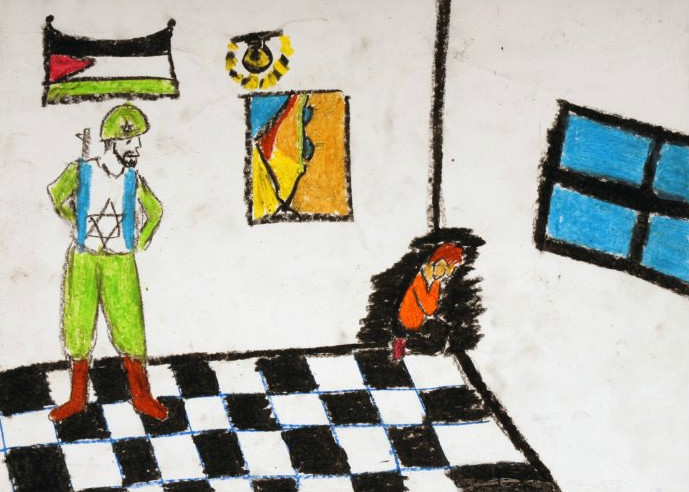
 Text: Michael R. Burch


 Composing this oratorio was made possible thanks to a grant from the Dutch Fund for the Podium Arts.
 As one of the persons preferring not to take any of the vaccines that are currently being pushed, I followed the developments surrounding the so-called Freedom Convoy, early 2022 in Canada, with more than average interest. As I see it, something happened there and then, that was quite surprising and that went against the visions of those who were at the time pushing very hard for everyone to ‘take the vaccine’.
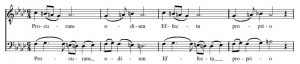

 As one of the persons preferring not to take any of the vaccines that are currently being pushed, I followed the developments surrounding the so-called Freedom Convoy, early 2022 in Canada, with more than average interest. As I see it, something happened there and then, that was quite surprising and that went against the visions of those who were at the time pushing very hard for everyone to ‘take the vaccine’.
 This is an abridged version for a composition with the same title for orchestra and and choir. It has been inspired by the Freedom Convoy in Canada, early 2022, and this version consists of eight movements that flow into one another without breaks. Here follows a description of each of these movements:
  Libretto by Franz K. Custos
 Text by Mask Force Bern (2020)
 Text by Mask Force Bern (2020)
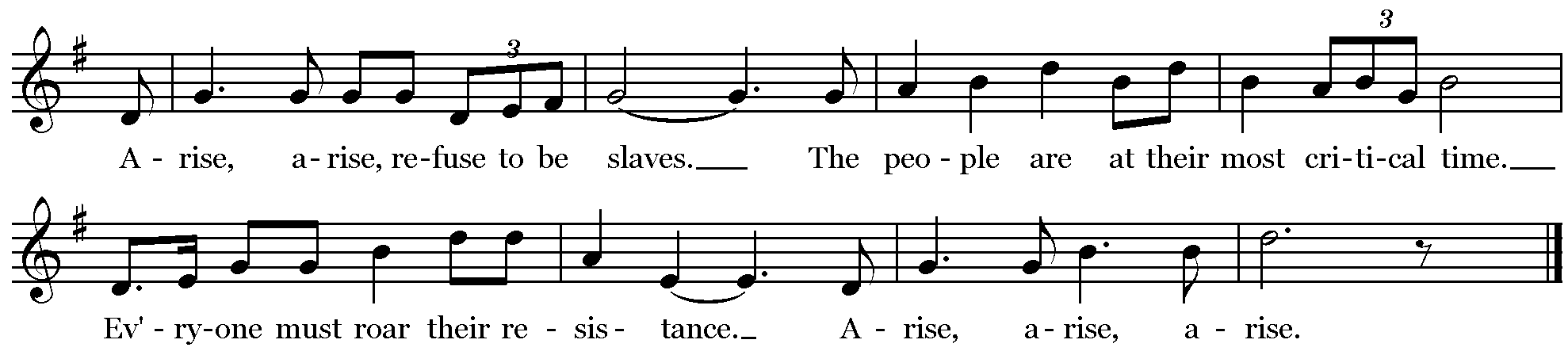
 Cover picture: Illustration of the novel “Diary of a Madman”) by Ilya Repin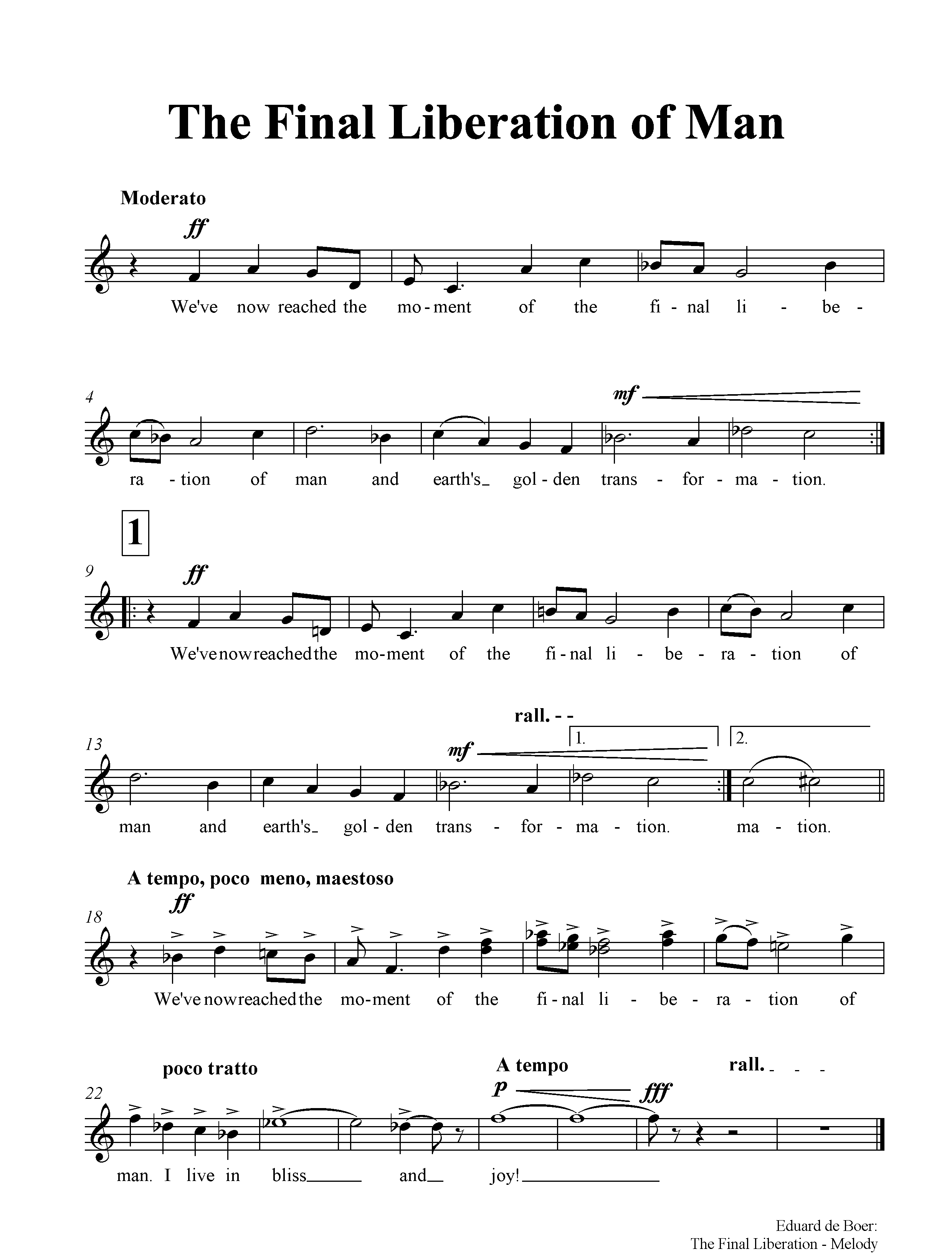
 In opdracht van en geschreven voor het Orkest Koninklijke Marechaussee ter gelegenheid van zijn 70-jarig jubileum op 12 april 2020
 In deze compositie staat het koraal Angelus van Georg Joseph (ca. 1630 – ca. 1668) centraal. Het werk bestaat uit een inleiding, waarin de zowel dit koraalthema wordt geëxposeerd als ook een thema dat aan het eind van het stuk als fugathema dient. Hierna volgen een viertal variaties en tenslotte een finale in de vorm van een fuga.
 The famous words Let There Be Light Again are taken from the so-called Speech of the Unknown Man, on July 4, 1776, during an assembly dedicated to signing the Declaration of Independence, which would declare America to be a free country and no longer a colony of Great Britain. In the words of an eye-witness:
 The electrifying speech stirred the reluctant signers of the Declaration of Independence into action. They all overcame their fear and enthusiastically signed the document. Legend has it that the ‘Unknown Man’ was in fact an apparition of Count of Saint Germain, according to some an spiritually highly advanced so-called ‘ascended master’. Whoever he was, he ended his now famous speech with these words: